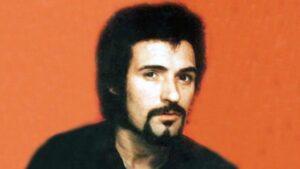
He has been called Britain’s forgotten serial killer. He was diagnosed as a psychopath at fifteen, was convicted of three killings at twenty-three, confessed at the time to eight more, and has been imprisoned continuously since 1975 — making him, by most reckonings, the longest-serving prisoner in modern British history. He is also, at the time of writing, repeatedly being considered for parole. This is the full story of Patrick David Mackay.
Part One: The Boy from Dartford
Patrick David Mackay was born on 25 September 1952 in Middlesex, the eldest of three children of Harold and Marion Mackay. The family settled in Gravesend, then Dartford, in north-west Kent — working-class commuter country on the edge of the London sprawl. By every account that emerged in the years following, the early atmosphere of the Mackay household was bad.
Harold Mackay was an alcoholic. He was, by the testimony of Patrick’s mother and sister gathered later by police and probation officers, a violent drunk who beat his wife and children when the mood took him. Patrick, as the eldest and a boy, took much of it. The descriptions of the beatings that emerged decades later in psychiatric reports include floggings with belts, slaps and punches to the face, episodes in which the small boy was held by the ankles and shaken. Patrick was ten years old in 1962 when his father died, suddenly, of a heart attack. The boy is said to have refused to accept the death. He told relatives his father was simply away at work. He spoke to him at the kitchen table. He kept up the pretence for some weeks.
What replaced the father was something arguably worse, because it was more durable: the inheritance of the father’s character in the son. Patrick began drinking heavily in early adolescence. He began stealing — small thefts at first, then escalating. He began to torture animals. By his early teens he had killed a tortoise belonging to a neighbour, cooked a cat alive on a fire, and was reported by other children to have attempted to throw a younger boy off a railway bridge. His mother, struggling to cope alone with three children, made repeated approaches to social services. The response, in the standards of 1960s English child welfare, was inadequate even by the lights of the time.
At fifteen, Patrick was assessed by a consultant psychiatrist named Dr Leonard Carr at Stone House Hospital in Dartford. Carr’s report, which would later be quoted in court, identified Mackay as a cold psychopathic killer. He used those exact words. Carr predicted that without sustained intervention the boy would, in due course, kill. He was admitted to Moss Side Hospital in Liverpool, a secure psychiatric facility, in 1968. He spent significant periods of the next several years in and out of secure psychiatric care, being discharged repeatedly into community arrangements that broke down within weeks.
Part Two: The Nazi Obsession
By his late teens, Patrick Mackay had developed two preoccupations that would, in their different ways, structure the rest of his life. The first was alcohol. He drank to blackout. He drank in mornings. He drank, in the assessment of the various psychiatrists who examined him over the next decade, as a way of producing the dissociation in which his violence was easier to commit.
The second was Nazism. Mackay had become, during his teenage years in and out of psychiatric care, obsessed with Adolf Hitler and the SS. He collected Nazi memorabilia. He gave himself the nickname Franklin Bollvolt the First and the title the Devil’s Disciple. He decorated the walls of his rented rooms with swastikas and pictures of Hitler. He talked, in increasingly grand fantasies, about staging mass killings — assassinations of public figures, attacks on synagogues, what he variously imagined as the founding act of a new political movement. The fantasies were juvenile in their construction. They were also, in their cumulative effect, a man systematically rehearsing himself for what he eventually did.
None of this was hidden. His landlords saw it. His acquaintances saw it. The probation officers and psychiatrists assigned to him over the years of his early adulthood saw it. He was, in the language of one of the later assessing physicians, “an obvious and looming danger.” The institutional response continued to be inadequate — partly because of resource shortages, partly because the legal framework of the time made sustained involuntary detention of someone who had not yet committed a serious offence difficult, and partly because the staff and systems around him were, simply, not equal to recognising what they were dealing with.
He committed dozens of minor offences during these years — burglaries, assaults, drunken fights, vandalism. He was repeatedly arrested. He was repeatedly given conditional sentences or psychiatric referrals that did not hold. By 1973, when he was twenty years old, he was living a chaotic life between rented rooms in north-west Kent and south-east London, drinking heavily, drifting in and out of casual employment, and beginning — in the assessment of investigators who later reconstructed his movements — to kill.
Part Three: The Killings He Was Convicted Of
Three murders are firmly attached to Patrick Mackay’s name, in the sense that he was convicted of them at the Central Criminal Court in November 1975. The convictions were for manslaughter rather than murder, on the grounds of diminished responsibility — a category in English law that recognises an offender’s mental state at the time of the killing as reducing culpability without exonerating it. The decision to accept the diminished responsibility plea was, as later commentators would argue, a controversial one. It also produced the outcome the prosecution wanted: an indefinite life sentence with a minimum term of twenty years, which has now been extended by the Parole Board more than half a dozen times.
The first of the convicted killings was that of Isabella Griffiths, an eighty-four-year-old widow who lived alone at 19 Cheyne Place, in Chelsea. Mrs Griffiths was a slight, frail woman who had, in the manner of many elderly Londoners in the 1970s, been kind to a young man who knocked at her door asking for charitable help. Mackay had visited her at least once. On 14 February 1974 he returned, talked his way in, and strangled her in her kitchen. He then took a kitchen knife and stabbed her in the abdomen with such force that the blade was buried to the hilt and remained embedded in her body when she was found a fortnight later. He left the house with whatever small amount of cash he had been able to find. The killing was almost certainly opportunistic rather than premeditated, though Mackay’s targeting of an isolated elderly woman was clearly part of a pattern he was developing.
The second was Adele Price, eighty-nine, who lived alone at 33 Lowndes Square in Kensington. On 10 March 1975, Mrs Price answered her door to a young man who said he was thirsty and asked for a glass of water. She let him in. He strangled her. He was still in the house when her granddaughter arrived, and only an accident — the granddaughter calling out to her grandmother, Mackay hearing her and slipping out without being seen — prevented a second death that afternoon. The Price killing, in its particulars, demonstrated everything that made Mackay especially dangerous: he had used a pretext that any kindly elderly woman would respond to, killed her within minutes of being admitted, and shown no apparent disturbance at the prospect that a relative might walk in on him at any moment.
The third was the killing that finally exposed him. Father Anthony Crean was a sixty-three-year-old Catholic priest who lived alone at a small cottage on the grounds of the Convent of Our Lady of the Cross at Shorne, in Kent. Father Crean had known Mackay since the young man’s adolescence, when he had been involved in welfare work with troubled boys in the Dartford area. He had, in the time-honoured way of clerics who attempt to extend kindness to obviously damaged young people, given Mackay food, talked to him about his life, attempted to provide some thread of stability. In 1974 Mackay had cashed a cheque stolen from Father Crean’s account, was caught, and was given a conditional discharge.
On 21 March 1975, eleven days after the Price killing, Mackay travelled to Shorne with the intention of confronting Father Crean. The two men spoke briefly at the door. Mackay then attacked the priest with a kitchen knife and a hatchet. The injuries inflicted on Father Crean — which were so severe that the local police officer who attended the scene needed extended psychiatric leave afterward — included repeated axe blows to the head that split the skull. Father Crean was found in his bath, where Mackay had apparently dragged him to drown him while he was still alive.
Mackay was arrested within hours. The local police had received a tip — Mackay had been spotted in the area, and the Crean connection was known. He was taken to Gravesend police station. Within a day, he had begun to talk.
Part Four: The Confessions
What Patrick Mackay said in the days following his arrest, to the police officers interviewing him and to the psychiatrists who began to assess him, is the great unresolved question of the case. He admitted, in detail, the killings of Griffiths, Price, and Crean. He then went on to admit at least eight further killings, providing details of when and where the victims had died, and in some cases of how he had selected and approached them. Each of the additional killings he described matched an unsolved murder on the books of various police forces in London, Essex, and Kent.
The eight confessed but never convicted killings include:
Heidi Mnilk, seventeen, a German au pair stabbed to death on a train between London Bridge and West Norwood on 14 July 1973. Her body was found on the platform; she had been thrown from the train as it moved. The killing was unsolved at the time of Mackay’s confession.
Mary Hynes, sixty-two, beaten to death in her flat in Kentish Town on 31 July 1973.
Frank Goodman, an elderly tobacconist found bludgeoned to death in his shop in Finsbury Park on 10 November 1974.
Ivy Davies, forty-eight, a café owner beaten to death with a metal bar in her home near Great Holland in Essex on 12 February 1975. Her son Victor has spent the rest of his life fighting for the case to be reopened and for Mackay to be formally charged. The Essex Police have looked at the case multiple times. The evidence, in the view of successive prosecutors, has never been quite enough to charge in the absence of the original confession.
Stephanie Britton, fifty-eight, and her four-year-old grandson Christopher Martin, found stabbed to death together in Hadley Green in Hertfordshire on 12 January 1974. The killing of the small child, in particular, is one that has stayed with the police officers who investigated the case.
The remaining two confessed but unconvicted killings — a tramp pushed into the Thames at Hungerford Bridge, and a vagrant pushed under a tube train at a North London station — were never matched to specific recorded deaths, in part because the deaths of homeless men in mid-1970s London were often poorly documented.
Within months of giving these confessions, Mackay had begun to retract them. By the time of his trial in November 1975, his defence team had successfully limited the prosecution case to the three killings of Griffiths, Price, and Crean. Two further killings — those of Sarah Rodmell, eighty-two, found dead at her home in Hackney in March 1974, and an attack on a man named Robert Sharp — were left to lie on file, the English legal procedure that allows prosecutors to record that an offence is acknowledged but not formally tried, on the basis that it would not affect the sentence the defendant was already going to receive.
The eight further confessions were never tested in court. Mackay has, in the decades since, denied them. He has variously claimed that the original confessions were the products of mental illness, of police pressure, of his own desire to inflate his criminal stature, and of confusion induced by the cocktail of antipsychotic medication and barbiturates he was on at the time of his arrest. The police officers who took the original statements have maintained throughout their careers that the confessions were genuine and detailed in ways that an innocent man could not have produced.
The honest position is the one that the Crown Prosecution Service has effectively held for fifty years: there is enough evidence to make most reasonable observers believe Mackay was responsible for the additional killings, and not enough to charge him with any of them in court.
Part Five: The Trial
Patrick Mackay’s trial opened at the Old Bailey on 17 November 1975 in front of Mr Justice Jones. The prosecution case, led by John Mathew QC, proceeded on the three killings of Griffiths, Price, and Crean. The defence, led by Walter Raeburn QC, did not contest that Mackay had committed the acts. The argument was entirely about his state of mind at the time and the resulting question of legal culpability.
Three psychiatrists gave evidence for the defence: Dr Leonard Carr, who had assessed Mackay at fifteen, Dr Patrick Gallwey, and Dr Edward Tidmarsh. All three concluded that Mackay suffered from a severe personality disorder amounting to psychopathy, that this disorder had been observable since adolescence, and that it had substantially impaired his ability to control his violent impulses. They argued for a finding of diminished responsibility. The prosecution did not put up psychiatric witnesses to dispute these conclusions. The Crown accepted the diminished responsibility plea.
The result was that Mackay was convicted, on 21 November 1975, of three counts of manslaughter rather than three counts of murder. The distinction in English law was procedurally significant but, in his case, made no practical difference: Mr Justice Jones sentenced him to life imprisonment with a recommendation that he serve a minimum of twenty years. The judge described Mackay, in his closing remarks, as a man “who is liable, in the absence of any kind of provocation, to embark on violent and intemperate behaviour.” He was twenty-three years old.
The decision to accept the diminished responsibility plea has been criticised in retrospect. As the journalist John Lucas argued in his 2019 book Britain’s Forgotten Serial Killer: The Terror of the Axeman, if Mackay were tried today, on the same facts, the Crown would almost certainly press for full murder convictions, and the result would be a whole-life order of the kind imposed on Levi Bellfield and Peter Sutcliffe. The 1975 disposal was a product of a different era’s understanding of psychopathy — an era in which the diagnosis was sometimes seen as more exculpatory than current criminal-justice thinking would consider it.
Part Six: The Long Detention
Patrick Mackay has been continuously incarcerated since March 1975, when he was first remanded at Brixton Prison. He has been held at various establishments over the half-century since, including Wakefield, Frankland, Long Lartin, and — since 2017 — at an open prison whose specific location has not been publicly disclosed. He has, at various points, been on day release, walking the streets of Bristol under supervision, painting, reading, and engaging in the educational and therapeutic activities by which a long-sentence prisoner is expected to demonstrate rehabilitation.
He has been eligible for parole since 1995, when his original twenty-year tariff expired. The Parole Board has considered his case at intervals ever since. Each previous hearing has refused release, on the basis that the risk of further violence is too high. The board’s reasoning has consistently emphasised three factors: the severity of the original offences, the unresolved status of the additional confessed killings, and the persistent psychiatric assessment that Mackay’s psychopathic personality structure is, in its core features, unchanged.
The hearings have become increasingly contentious. In 2019, the local MP for Dartford, Gareth Johnson, began a public campaign to keep Mackay imprisoned, repeatedly raising the case in Parliament and writing to successive Metropolitan Police Commissioners to urge that the cold cases be reopened. Victor Davies, the son of Ivy Davies, has been similarly vocal and persistent. The Daily Mail and Mirror have run repeated front-page pieces in the run-up to each hearing. The phrase “Devil’s Disciple,” which Mackay coined for himself in the early 1970s, has become a tabloid shorthand that the Parole Board’s panels must, in practice, sit with each time they consider his case.
By 2022, in his late sixties, Mackay had legally changed his name to David Groves. He continues to use that name in correspondence and in some of the documentation around his ongoing review. The change has produced criticism — that he is attempting to launder his identity in advance of release — though English law on the renaming of life prisoners is broadly permissive and the practice itself is not unusual.
His most recent parole hearings, in 2022 and 2023, did not result in release. The Parole Board’s published reasoning has consistently referenced the residual concern about the additional confessed killings and the assessment that Mackay’s underlying personality remains structurally what it was when he committed his offences. He remains, by the consensus of those who have assessed him professionally, a man whose conduct in custody has been broadly cooperative but whose fundamental psychological architecture has not changed.
Part Seven: The Question of Psychopathy
Patrick Mackay is one of the relatively small number of British criminal cases that has substantial contemporaneous psychiatric documentation across decades. Dr Carr’s 1968 assessment, the trial-stage reports of Gallwey and Tidmarsh, and the multiple subsequent assessments by prison psychiatrists and the Parole Board’s panel of consultants form a continuous record stretching over more than half a century.
What that record describes is a textbook case of antisocial personality disorder with psychopathic features. Mackay scored highly on Robert Hare’s Psychopathy Checklist when it was applied retrospectively to his case by researchers in the 1990s. He demonstrated, by the standards of every assessor who examined him, the constellation of features that define the disorder: superficial charm with no underlying emotional engagement; an inability to form genuine attachments to other people; profound deficiency in remorse, guilt, or empathy; a pattern of pathological lying; a need for stimulation that, in his case, the violent killings appeared substantially to satisfy; and a complete absence of long-term planning or capacity for reflection on consequences.
What the record also describes, however, is a man whose conduct in custody has been markedly less violent than his pre-custody behaviour. He has not been involved in serious assaults on prison staff or other inmates. He has engaged with treatment programmes. He has, in the language of the parole reports, “demonstrated compliance.” The question on which his case repeatedly turns is whether this represents genuine rehabilitation — a meaningful change in the underlying personality structure — or whether it represents only the consequences of a highly controlled environment in which the behaviours that drove his violence in the community (chaotic drinking, unstable living arrangements, social isolation, ready access to vulnerable potential victims) are not available to him.
The professional consensus, by most reasonable readings of the available material, is that the latter is the case. Mackay has not changed in any fundamental way. He has simply been kept in an environment in which the conditions for his violence cannot easily occur. Whether that environment can be safely extended into community settings — as parole would require — is a question on which the Parole Board’s experts have, year after year, continued to err on the side of caution.
Part Eight: The Names That Matter
The three convicted victims of Patrick Mackay were Isabella Griffiths, Adele Price, and Father Anthony Crean. Each was, in different ways, a person of significant decency whose life was ended by a young man they had attempted to be kind to.
Isabella Griffiths was the widow of a barrister, the mother of two daughters, and a regular communicant at the Chelsea Old Church. She had been described by neighbours as a woman who would speak to anyone, regardless of class or circumstance, and who had a particular weakness for young people in difficulty. She was eighty-four years old. She had been a widow for many years.
Adele Price was the widow of a baronet, Sir Henry Price, and lived in considerable comfort in her Kensington flat. She was, by family accounts, a deeply religious woman who took seriously the obligations of Christian charity. She was eighty-nine. She had, in the moments before she let Patrick Mackay into her home, almost certainly been thinking that giving a glass of water to a thirsty young man on a cold March afternoon was a small kindness it would have been ungenerous to refuse.
Father Anthony Crean was a Carmelite priest who had spent his career in pastoral work and in the welfare of troubled young people. He had known Mackay since the boy was in his mid-teens. He had been warned by other social workers and probation officers that Mackay was unusually dangerous. He had nonetheless continued, in the tradition of his order and his calling, to extend such kindness to the young man as he could. It cost him his life.
The eight further victims who Mackay confessed to and then denied — and who, on the balance of the evidence available, he almost certainly killed — include Heidi Mnilk, Mary Hynes, Frank Goodman, Ivy Davies, Stephanie Britton, four-year-old Christopher Martin, and two unidentified homeless men whose deaths in 1974 and 1975 were never satisfactorily linked to identified bodies.
If the full list is taken as approximately accurate — and there is good reason to think it is — then Patrick Mackay killed eleven people between July 1973 and March 1975, in a series of attacks that spanned the south-east of England and that targeted, with deliberate consistency, people who were old, alone, religious, or otherwise unlikely to be able to defend themselves. The killing of Christopher Martin is, in some respects, the hardest of the cases to read about. He was four years old. He had been visiting his grandmother. His body was found beside hers.
A Final Note
Patrick Mackay has been, for almost his entire adult life, the subject of careful institutional supervision. Psychiatrists, prison officers, probation staff, and parole panel members have monitored, assessed, and reassessed him at every stage of his confinement. The accumulated documentation runs to many thousands of pages. The disagreement, throughout, has not been about what he is — that is settled — but about whether what he is can be safely released back into a community.
The argument for releasing him, which his defenders make in the carefully measured language that parole proceedings require, is that he has served far in excess of his original twenty-year tariff, has cooperated with his treatment, has demonstrated no further violence in custody, and is now in his seventies, an age at which the empirical likelihood of reoffending in serious violence is markedly reduced. The argument against, which the families of his victims and a substantial portion of the British press have made for years, is that the conditions that produced his violence in the 1970s — chaotic drinking, isolation, access to vulnerable elderly strangers — could be rapidly recreated in a community release, that the psychiatric consensus is that his underlying personality has not changed, and that the eight additional confessed killings have never been formally reckoned with.
The Parole Board has, so far, taken the latter view. Whether it will continue to do so as Mackay ages further, becomes physically less capable, and accumulates additional years of cooperative custody, is not knowable from the public record. The case will, in all likelihood, continue to come back to the board every two or three years until either Mackay dies in custody or a panel concludes that the balance of risk has shifted enough to allow his release.
The families of Isabella Griffiths, Adele Price, Anthony Crean, Ivy Davies, and the others have waited fifty years for resolution. Some of them are no longer alive to provide it. Those who remain continue, in the patient way of people who have outlived the worst thing that happened to them, to ask of the British state only that the man who killed their relatives should not be permitted to do it again. It is not a complicated request. It is the central thing that any criminal justice system is for.
Whether that request is fulfilled, in the years that remain to Patrick Mackay and to those who survived him, is the only question of his case that is now still genuinely open.