The Dahmer case involves murder, necrophilia, cannibalism, and the sexual abuse and killing of a fourteen-year-old child. It also involves documented and sustained failures by Milwaukee law enforcement that allowed killings to continue, rooted in the marginalisation of the victims. Both elements are central to the honest telling of the case, and both are handled here with appropriate seriousness and restraint. The material is extremely disturbing; readers should make their own assessment before continuing.
Part One: The Oxford Apartments
At 924 North 25th Street in the Avenues West neighbourhood of Milwaukee, Wisconsin, there stands a three-storey apartment building of a kind entirely unremarkable in American cities of the postwar period — brick-fronted, eight units per floor, a shared stairwell, a small lobby with mailboxes. In the early 1990s the building was called the Oxford Apartments, and it housed a mixed community of working-class Milwaukee residents: labourers, unemployed people, recent immigrants, people of modest and often precarious means. The neighbourhood itself was predominantly Black, located in a part of Milwaukee that had been shaped by decades of residential segregation and economic disinvestment. The building’s management was not particularly attentive. The tenants’ concerns were not particularly attended to. It was, in almost every respect, the kind of building and the kind of neighbourhood that official Milwaukee — its police force, its media, its civic institutions — was accustomed to not looking at very carefully.
In Apartment 213, on the second floor, a thirty-one-year-old white man named Jeffrey Lionel Dahmer had been living since May 1990. He worked the night shift at the Ambrosia Chocolate Factory, a few miles away. He kept odd hours. He was quiet. He occasionally produced smells from his apartment that his neighbour, a woman named Glenda Cleveland, had complained about repeatedly to building management. He once told her, when she asked about the smell, that his tropical fish had died. He was polite, bland, nondescript. He was, by any external assessment, an unremarkable resident of an unremarkable building in an unremarkable neighbourhood.
Between the time he moved into Apartment 213 in May 1990 and the night of 22 July 1991 when he was arrested, Jeffrey Dahmer killed twelve men in that apartment. He had killed five more before moving there. He had, across the thirteen years of his murderous campaign, killed seventeen people in total — all of them men or teenage boys, almost all of them gay men of colour, almost all of them from communities that had, over the years, developed a well-founded distrust of the Milwaukee Police Department’s willingness to take their concerns seriously.
The case of Jeffrey Dahmer is not simply the case of a serial killer. It is the case of a serial killer operating in a specific social and institutional context that allowed him to operate for thirteen years. Understanding that context is the only way to understand the case.
Part Two: The Ohio Boy
Jeffrey Lionel Dahmer was born on 21 May 1960 in Milwaukee, Wisconsin, the elder of two sons of Lionel and Joyce Dahmer. The family moved to Bath Township, Ohio, in 1968, where Lionel was completing a doctorate in chemistry at Ohio State University. Bath Township was a quiet, affluent suburb of Akron — a long way, socially and geographically, from the Milwaukee neighbourhood where Dahmer would eventually commit most of his murders.
The early years of Dahmer’s life have been examined in detail by the journalists and psychologists who have written about the case, and the picture that emerges is of a childhood shaped by two compounding factors: a difficult family environment and an internal psychological life that Dahmer himself later described as oriented, from a very early age, toward morbid preoccupation with bodies. His parents’ marriage was deeply unhappy. His mother Joyce suffered from what Dahmer’s father Lionel has described in his own memoir as severe mental illness including psychosis and hypochondria; she was hospitalized on multiple occasions during Dahmer’s childhood, and her behaviour created a domestic atmosphere of unpredictability and anxiety. His father Lionel was a chemistry graduate student who was often absent and who, when present, found it difficult to connect meaningfully with the withdrawn and increasingly strange child his son was becoming.
Dahmer has described, in the interviews he gave after his arrest, a childhood preoccupation with animal remains that began when he was around eight or nine years old. He was fascinated by the bones and bodies of animals found near the Ohio property. He began collecting them. He bleached them. He kept them. He later described this as the beginning of what he called a compulsive curiosity about the insides of things — a curiosity that, in its adult form, he redirected onto human beings. Whether this account is accurate memory, post-hoc construction, or some combination of the two is something no one can now determine, but the consistency with which he described it across multiple interviews after his arrest gives it a degree of credibility.
He showed no obvious psychiatric symptoms during his school years. He was, by his classmates’ later accounts, an intelligent but increasingly isolated teenager who used alcohol to manage a social anxiety that was clearly becoming serious. He was drinking heavily by fifteen. He was, by his own account, aware by early adolescence of a sexual attraction to men that he experienced not as something straightforward but as something entangled, from the beginning, with the morbid preoccupations that had begun with the animal remains. He has described dreaming, as a teenager, of having sex with corpses. The detail is disturbing precisely because it arrived so early and so clearly, in retrospect, as the shape of what was eventually going to happen.
His parents divorced in 1978, the year he graduated from high school. Both parents left the Ohio property at different times through that summer, leaving seventeen-year-old Jeffrey alone for extended periods in the Bath Township house. It was during one of those periods that he committed the first murder.
Part Three: Steven Hicks
On 18 June 1978, Steven Mark Hicks, eighteen years old, was hitch-hiking in Bath Township, Ohio. He had been to a rock concert. He was hoping to get to a friend’s house. Dahmer offered him a lift. He accepted. Dahmer drove him back to the family home, where the two young men drank beer together and talked. When Hicks said he needed to leave, Dahmer hit him twice from behind with a ten-pound barbell dumbbell. He strangled him with the bar. He put the body in the crawl space beneath the house. Over the following weeks he dissected it, dissolved the flesh in acid, smashed the bones with a sledgehammer, and scattered the fragments in the woods behind the property.
The killing was, by Dahmer’s own later account, entirely impulsive. He had not planned it. He had wanted Hicks to stay. When Hicks said he was leaving, the impulse to prevent him leaving by whatever means were available had been, he said, stronger than any other consideration. He did not kill again for nine years. The intervening period was, by his own account, consumed by the fantasy of what he had done and by an intense effort to prevent himself from doing it again.
The effort was unsuccessful. But the nine-year gap between the first killing and the resumption of the campaign is one of the most significant features of the case. During those nine years, Dahmer joined the United States Army — enlisting in 1979, being stationed in Germany, being discharged in 1981 after his alcohol problems became operationally untenable. He moved to Miami for a period. He moved back to Ohio. He moved to Milwaukee in 1982, where he lived for a time with his grandmother Catherine in the suburb of West Allis. He was convicted in 1982 of indecent exposure. He was convicted again in 1986 of a second indecent exposure, for masturbating in front of two children at a river bank. He was given one year’s probation for the second offence, with a psychiatric evaluation that found him to be manipulative and resistant to therapy. None of this produced any sustained intervention.
He began killing again in November 1987.
Part Four: The Campaign
The second victim was Steven Tuomi, twenty-four, killed in November 1987 at a Milwaukee hotel room. Dahmer told investigators he had no memory of the killing itself — that he had woken up to find Tuomi dead beside him. The claim was almost certainly not true; the dismemberment and disposal of the body required planning and equipment that suggested something other than a blank. Whatever the precise sequence, Tuomi’s body was carried from the hotel in a large suitcase, taken to the West Allis grandmother’s house, and dismembered in the basement.
Between January 1988 and the autumn of 1988, Dahmer killed three more young men — James Doxtator, fourteen; Richard Guerrero, twenty-five; and Anthony Sears, twenty-four — all in the grandmother’s West Allis basement. All were gay men who had been met at bars or bathhouses. All were drugged, sexually assaulted, strangled, and dismembered. Sears’s skull and genitalia were preserved — the beginning of the practice of keeping trophies that would eventually produce the apartment inventory that horrified the investigators who entered Apartment 213 in 1991.
In September 1988, a day after renting his own apartment in Milwaukee, Dahmer was arrested for the first time in direct connection with a sexual assault. He had drugged and fondled a thirteen-year-old Laotian boy named Somsack Sinthasomphone — the older brother of the fourteen-year-old who would later be returned to him by Milwaukee police officers. Dahmer was convicted in January 1989 of second-degree sexual assault and enticement of a child for immoral purposes. He was sentenced in May 1989 to five years’ probation and one year at a community treatment centre, with the year at the facility structured as a work release arrangement so that he could continue his factory job. He told the sentencing judge that the conviction had been a turning point, that he was committed to change, that he was seeking help. He was, at the time of his address to the judge, actively planning his next killing.
Anthony Sears was killed in March 1989, two months before the sentencing hearing. Between then and the move to Apartment 213 in May 1990, Dahmer killed at least one more person — Raymond Smith, thirty-three — during a brief period when his grandmother had allowed him to move back to West Allis.
The move to Apartment 213 marks the beginning of the most intensive phase of the killing campaign. Between May 1990 and July 1991, Dahmer killed twelve men in the apartment. The names, given in roughly chronological order, are: Edward Smith, twenty-seven; Ernest Miller, twenty-two; David Thomas, twenty-three; Curtis Straughter, eighteen; Errol Lindsey, nineteen; Tony Hughes, thirty-one; Konerak Sinthasomphone, fourteen; Matt Turner, twenty; Jeremiah Weinberger, twenty-three; Oliver Lacy, twenty-three; Joseph Bradehoft, twenty-five.
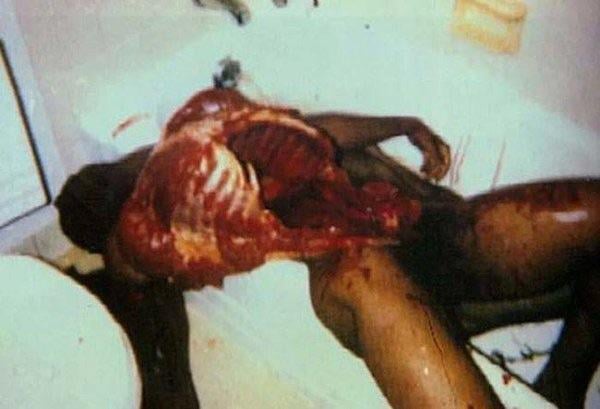
The methods had by this point become almost entirely consistent. He met victims at gay bars, bathhouses, or shopping malls. He offered them money to come back to his apartment to pose for photographs or to drink with him. At the apartment he drugged their drinks with sleeping tablets. When they were unconscious he strangled them. After death he had sex with the bodies. He dismembered them in the bathroom. He kept skulls, genitalia, and other body parts as trophies. He photographed the bodies in various stages of dismemberment. He experimented with methods of preserving and displaying body parts. He ate the flesh of several victims. He poured acid into the skulls of several others while they were still alive, having drilled through the bone, in an attempt to create living but compliant zombies — an experiment that cannot be adequately explained by any clinical model and that represented, by the assessment of every psychiatrist who evaluated him, the most extreme expression of his need for total control over another person.
The smell from Apartment 213 became, by late 1990 and early 1991, the subject of repeated complaints to building management from Glenda Cleveland and other neighbours. The explanations Dahmer gave — dead fish, meat going off in the freezer — were implausible to the people who smelled what they were actually smelling, but were not pursued. The building management did not call the police. The police did not call on Dahmer. The complaints were made and filed and nothing was done.
Part Five: The Night Konerak Sinthasomphone Escaped
On the evening of 26 May 1991, Dahmer met Konerak Sinthasomphone, fourteen years old, near the Grand Avenue Mall in Milwaukee. Konerak was the youngest brother of Somsack Sinthasomphone, the thirteen-year-old Dahmer had been convicted of assaulting in 1988. Dahmer did not know the connection. He offered Konerak money to come back to the apartment to pose for photographs. Konerak went with him. Dahmer drugged him and sexually assaulted him. He then left the apartment to go to a nearby tavern for a drink.
While Dahmer was at the bar, Konerak Sinthasomphone regained a degree of consciousness and made it out of Apartment 213 and down the building’s stairs to the street. He was naked. He was bleeding from a sexual assault. He was barely able to stand or speak due to the drugs in his system. Two young women — Sandra Smith and Nicole Childress — found him in the street and called 911. An ambulance and police officers from the Milwaukee Police Department arrived at the scene.
Dahmer returned from the bar to find Konerak on the street surrounded by paramedics and police officers. He approached. He told the officers that Konerak was nineteen years old. He told them Konerak was his boyfriend. He told them Konerak had been drinking and that this was a domestic matter. He suggested the officers accompany him back to the apartment, where he said he could produce evidence of the relationship.
The officers — John Balcerzak and Joseph Gabrish — followed Dahmer and Konerak back to Apartment 213. In the apartment, Dahmer showed them Polaroid photographs of Konerak which he claimed showed a romantic relationship. The officers did not notice — or did not act on — the fact that some of the photographs showed Konerak in poses consistent with incapacitation rather than consent. They did not check Dahmer’s background, which would have immediately revealed his 1989 conviction for the sexual assault of a child. They did not ask Konerak’s age independently. They did not contact the ambulance crew that had initially attended to Konerak. They did not notice the smell in the apartment — or if they noticed it, they did not investigate its source. They noted, in the written report they filed later, that the apartment had “an unusual odour.” They did not connect that odour to anything worth investigating further.
They returned Konerak Sinthasomphone to Jeffrey Dahmer. They left the building. As they walked away, one of them could be heard on the police radio transmission that was later recovered as evidence, laughing about having dealt with a “intoxicated Asian naked male” returned to his “sober boyfriend.” The laughter was audible on the recording. Glenda Cleveland, who had been at the scene and had spoken to both the officers and to Dahmer, called the police station afterwards to report her concerns. She was told, seven times across the conversation that followed, that Konerak was an adult who had been appropriately handled. At no point during the call was anyone interested in what she had to say.
Konerak Sinthasomphone was killed by Dahmer later that same night. He was fourteen years old. His family had fled Laos in 1979, after the communist takeover of the country threatened to seize their rice farm, and had come to Milwaukee looking for the safety and possibility that America was supposed to represent. Konerak had a 100% chance of surviving the night, his brother said afterwards, if the officers had acted on what they could see in front of them.
The officers were fired in December 1992, after a four-week hearing. They appealed. They were reinstated. They received back pay totalling approximately $55,000 each. John Balcerzak subsequently served four years as president of the Milwaukee Police Association, the union that represented the officers who had failed every one of Dahmer’s victims. He retired from the Milwaukee Police Department in 2017. Joseph Gabrish retired in 2004. Neither has, in any available public record, expressed meaningful remorse for what they did on the night of 27 May 1991.
Part Six: The Arrest
On the night of 22 July 1991, Tracy Edwards, thirty-two, was in Apartment 213. He had met Dahmer earlier that evening and had agreed to come back to the apartment. Dahmer had produced a beer with sedatives in it. Edwards, noticing the taste, had refused to drink more than a small amount. He was less drugged than Dahmer’s other victims. He had been in the apartment for several hours, with Dahmer periodically distracted, when he managed to punch Dahmer and run out of the building.
Edwards flagged down Officers Robert Rauth and Rolf Mueller, who were on patrol in the neighbourhood. He told them a man had threatened him with a knife and had handcuffed him. He led them back to the Oxford Apartments and to Apartment 213. Dahmer answered the door calmly. He attempted the same performance he had managed with Balcerzak and Gabrish two months earlier — the misunderstanding, the suggestion that this was a domestic matter, the request that everyone calm down. This time it did not work. One of the officers moved through the apartment. He opened the refrigerator. He found a human head.
Dahmer was arrested. His exact words to the arresting officers, by the account given by the officers in subsequent testimony, were: “For what I did, I should be dead.”
The investigation of Apartment 213 that followed the arrest was one of the most extensive forensic operations in Wisconsin history. What was found in the apartment included: four human heads in the refrigerator and freezer; a complete human skeleton; two skulls on top of a computer; a fifty-seven-gallon drum in a corner of the bedroom containing three torsos decomposing in acid solution; various preserved internal organs; dozens of Polaroid photographs of victims at various stages of dismemberment; multiple saws, drills, and containers of chemicals; and human remains in various other states of preservation throughout the apartment. The remains of eleven individuals were eventually identified at the apartment. Dahmer’s grandmother’s basement in West Allis provided further evidence. The remains of Steven Hicks were eventually recovered from the Bath Township, Ohio property where he had been killed thirteen years earlier.
Dahmer confessed to seventeen murders across the following days of interrogation, in the same calm, detailed, cooperative way that had characterised his performance in the Oxford Apartments lobby and in the various probation meetings and court hearings of his adult life. The confessions were extensive and specific. He described each killing. He described what he had done to each body. He described the attempted lobotomies, the cannibalism, the preservation experiments, the Polaroid documentation. He showed no particular distress during the accounts. He was, the interrogating officers later said, like someone describing a set of practical problems he had encountered and resolved.
Part Seven: The Trial
Dahmer was charged with fifteen counts of first-degree intentional homicide in Wisconsin. The Ohio murder of Steven Hicks was charged separately. His trial began on 30 January 1992 at the Milwaukee County Circuit Court before Judge Laurence Gram Jr.
His defence was, as with Peter Sutcliffe’s trial in England a decade earlier, built on a single legal question: was he sane? Dahmer had pleaded guilty to all fifteen Wisconsin murders, which meant that the trial was effectively a sanity hearing. The defence needed to establish, to the jury’s satisfaction, that Dahmer had been suffering from a mental disease or defect that prevented him from appreciating the wrongfulness of his conduct. The prosecution needed to establish that he had not.
Four defence psychiatrists testified that Dahmer suffered from paraphilias — specifically necrophilia and a sexual sadism directed toward death — that amounted to a mental disease. The prosecution’s experts countered that the paraphilias, however serious, were not the kind of mental disease that removed criminal responsibility, and that Dahmer’s behaviour — the planning of the murders, the management of the investigations, the post-arrest cooperation — demonstrated a man fully aware of what he was doing and choosing to do it. They argued that Dahmer’s own statement to the arresting officers — “For what I did I should be dead” — was itself evidence of a man who understood, in real time, that what he had done was wrong and that the consequences were appropriate.
The jury deliberated for approximately five hours before returning verdicts of sane on all fifteen counts. Dahmer was sentenced to fifteen consecutive life terms — a total of 957 years — with no possibility of parole. The Ohio murder produced an additional life sentence in a subsequent proceeding.
Dahmer received his sentence without visible reaction. He was transferred to the Columbia Correctional Institution in Portage, Wisconsin. He told prison staff and journalists in the months following his conviction that he considered the sentence appropriate. He stated, repeatedly and in terms that appeared genuine to those who observed him, that he felt relief at having been caught — that the compulsion that had driven the killings had been something he had been unable to stop alone, and that the arrest and conviction had ended something he had not had the capacity to end himself. He also expressed, in a 1993 television interview with Stone Phillips, what appeared to be genuine remorse for the families of his victims. The remorse, as with so many aspects of Dahmer’s self-presentation, remains impossible to assess conclusively from the outside.
Part Eight: What the Case Actually Was About
The standard framing of the Jeffrey Dahmer case — the one that the early 1990s press largely adopted and that has persisted in many popular treatments — is the framing of the aberrant individual: the monster who hid in plain sight, the mild-mannered factory worker whose apartment concealed an incomprehensible horror. This framing is not wrong, exactly, but it is significantly incomplete. It leaves out the part of the story that is most important for understanding why seventeen people were killed.
Almost all of Dahmer’s victims were gay men of colour. The majority were Black. Several were recent immigrants or the children of immigrants. They were young men from Milwaukee’s marginalised communities — communities that had been shaped by decades of residential segregation, economic exclusion, and documented police hostility. When members of those communities raised concerns about the Oxford Apartments — about the smell, about Konerak Sinthasomphone in the street, about the missing persons that no-one in official Milwaukee was particularly searching for — the response they received was the response that official Milwaukee had given those communities for generations. Which was, substantially, nothing.
The Konerak Sinthasomphone incident, with its radio transcript of officers laughing about returning a drugged fourteen-year-old to his “boyfriend,” was the most egregious single failure. It was not, however, the only one. Several of Dahmer’s victims had been reported missing by family members whose reports had not been followed up with any urgency. The sustained smell complaints from Glenda Cleveland and other Oxford Apartments residents had produced no police response. The community meetings that took place in Milwaukee’s Black neighbourhoods after the arrests in July 1991 — meetings in which residents described years of not being heard, not being helped, not being treated as people whose deaths would matter — documented a systemic failure that the Sinthasomphone incident crystallised but did not create.
The two officers who returned Konerak to Dahmer were white. Konerak was Laotian. The women who had found him in the street, whose concerns the officers dismissed, were Black. Dahmer was white. These details are not incidental to the story. They are, in the assessment of the Milwaukee community members who lived through the case and of the scholars who have written about it since, the story.
The Ryan Murphy Netflix series Monster: The Jeffrey Dahmer Story, released in 2022, was the most-watched English-language series in Netflix history at the time of its release, accumulating 700 million viewing hours in its first month. The series, which starred Evan Peters as Dahmer, made the decision to structure significant portions of the narrative from the perspective of Glenda Cleveland and of the victims’ families rather than solely from Dahmer’s. The choice was controversial — some victims’ families objected to the series without their consent, and several noted that the series had, despite its victim-centring intentions, still amplified Dahmer’s profile in ways that made them uncomfortable. The criticism was valid. The production company and Netflix did not seek adequate consultation with the victims’ families before production. The series nevertheless brought the specific institutional failures of the Milwaukee Police Department — the Sinthasomphone incident, the back pay awarded to the dismissed officers, Balcerzak’s subsequent election as union president — to an audience of hundreds of millions of people who had not previously known the details.
Part Nine: The Death in Prison
Dahmer was killed in prison on 28 November 1994, three years into his sentence. He was twenty minutes into the morning work detail in the gymnasium of the Columbia Correctional Institution when a fellow inmate, Christopher Scarver, a twenty-five-year-old convicted murderer, beat him with a metal bar taken from the prison weight room. Jesse Anderson, another inmate who had been assigned to the same detail, was also killed in the same attack. Dahmer was pronounced dead at a nearby hospital approximately an hour after the attack. He was thirty-four years old.
Scarver gave various accounts of the killing over the years following. In a 2015 New York Post interview he said that Dahmer had been provoking other inmates by fashioning severed limbs from prison food and taunting them, and that he had decided to kill Dahmer because of what Dahmer had done to his victims. He also said that when he confronted Dahmer in the gymnasium, Dahmer had not tried to defend himself or run. Whether this last detail — the absence of any apparent attempt at self-preservation — says something meaningful about Dahmer’s own account of his state of mind in prison, or whether it is simply the detail that a violent incident in a prison gymnasium produces, is something no available source can tell us.
Dahmer’s death was the occasion for a variety of public responses that, taken together, said more about American cultural attitudes toward victims and perpetrators than about the man himself. Some members of the victims’ families expressed relief. Others said his death changed nothing. Lionel Dahmer, Jeffrey’s father, who had written a memoir about his son published earlier in 1994, gave interviews in which he expressed grief mixed with an evident inability to fully integrate what his son had been. The public at large reacted in ways consistent with every previous public reaction to a major serial killer’s death: a brief wave of commentary followed by a return to the ordinary business of forgetting.
The Oxford Apartments building was demolished in November 1992, following extensive pressure from residents and local officials. The site was purchased by the local authority, which converted it to a parking lot. A small memorial garden was eventually established near the site. The Ambrosia Chocolate Factory where Dahmer had worked closed in 2003 for unrelated business reasons and was subsequently demolished. The Bath Township, Ohio property where Steven Hicks was killed was sold and later developed. Nothing marks it.
Part Ten: The Names That Matter
The murdered were seventeen men and boys. Their names are:
Steven Mark Hicks, eighteen, killed 18 June 1978 in Bath Township, Ohio. A young man hitch-hiking home from a rock concert.
Steven Walter Tuomi, twenty-four, killed November 1987 in Milwaukee. A restaurant worker.
James Edward Doxtator, fourteen, killed January 1988 in Milwaukee. A child.
Richard Guerrero, twenty-five, killed March 1988 in Milwaukee.
Anthony Lee Sears, twenty-four, killed March 1989 in Milwaukee. An aspiring model.
Raymond Lamont Smith, also known as Ricky Beeks, thirty-three, killed May 1990 in Milwaukee.
Edward Warren Smith, twenty-seven, killed June 1990 in Milwaukee.
Ernest Marquez Miller, twenty-two, killed September 1990 in Milwaukee. A dance student.
David Courtney Thomas, twenty-three, killed September 1990 in Milwaukee.
Curtis Durrell Straughter, eighteen, killed February 1991 in Milwaukee.
Errol Lindsey, nineteen, killed April 1991 in Milwaukee.
Tony Anthony Hughes, thirty-one, killed May 1991 in Milwaukee. Deaf from birth, Hughes communicated with Dahmer by writing notes. He had been lured by an offer of $50 to pose for photographs.
Konerak Sinthasomphone, fourteen, killed 27 May 1991 in Milwaukee. He had been found alive in the street, naked and bleeding, by two women who called the police. He was returned to his killer by the responding officers. He had a 100% chance of surviving the night, if the police had acted on what they could see.
Matt Cleveland Turner, twenty, killed June 1991 in Milwaukee.
Jeremiah Benjamin Weinberger, twenty-three, killed June 1991 in Milwaukee.
Oliver Lacy, twenty-three, killed July 1991 in Milwaukee.
Joseph Arthur Bradehoft, twenty-five, killed 19 July 1991 in Milwaukee. The last of the seventeen.
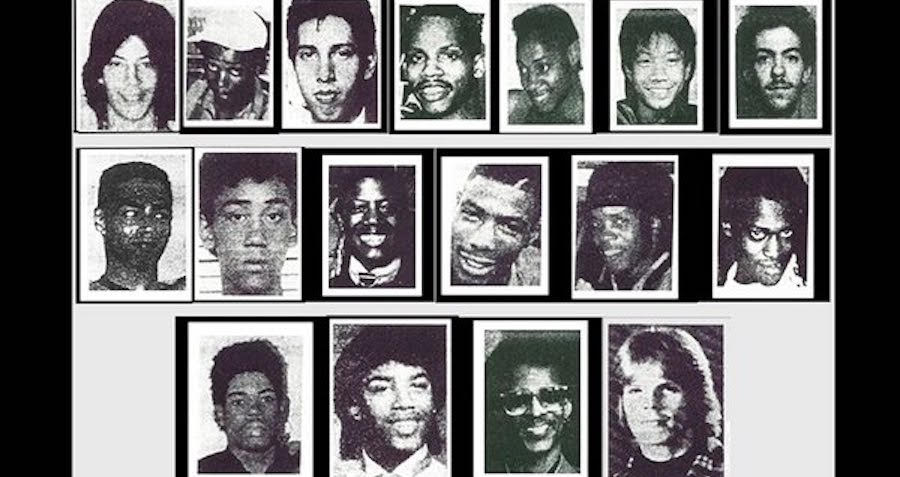
The youngest was fourteen. The oldest was thirty-three. The majority were Black. Several were recent immigrants or the children of immigrants. Most were gay men from communities that had every reason, over those thirteen years, to expect that when they went missing no-one in official Milwaukee was going to look very hard for them. They were, in the honest accounting of the case, right about that. The failure to find them while they were still alive was not an accident or an oversight. It was the predictable result of what Milwaukee — its police force, its civic institutions, its media — was in 1978 and in 1987 and in 1991.
A Final Note
The question that persists around the Jeffrey Dahmer case, more than thirty years after the arrest, is a version of the question the Yorkshire Ripper case produced in Britain at roughly the same time: how many of these murders were preventable, and by what? In both cases, the honest answer is: several, and by basic policing competence applied with equal urgency to all victims regardless of their race, sexuality, or social position.
In Dahmer’s case the number is clear. Konerak Sinthasomphone was alive and in police custody on the street outside the Oxford Apartments on the night of 27 May 1991. The officers who handed him back to Dahmer had the means to prevent his death, and the deaths of the three men Dahmer killed after him, by the simple act of checking the background of the man who was trying to retrieve an apparently injured fourteen-year-old from a group of paramedics. They did not do this. Their explanation, offered at the subsequent disciplinary hearing, was that they had been “sensitive to a caring homosexual relationship.” The disciplinary commission rejected this explanation. The state’s civil service appeal board overrode the commission’s rejection. The legal system of Wisconsin ultimately agreed that whatever the two officers had done, it did not justify dismissal. One of them spent four years leading the organisation that represents Milwaukee’s police officers.
These are the facts of the case. They sit alongside the names of the seventeen dead in a relationship that requires no editorialising. The editorialising has already been done by the facts themselves. Seventeen men and boys were killed in Milwaukee between 1978 and 1991 because a deeply disturbed and forensically careful man identified them correctly as people whose disappearance would not be vigorously investigated. He was right. The last two things the city of Milwaukee owes those seventeen people — the honest acknowledgement of this institutional failure, and the permanent memory of their names — are the minimum of what should remain.