Lizzie Borden took an axe / And gave her mother forty whacks. / When she saw what she had done / She gave her father forty-one. The schoolyard rhyme is wrong on almost every count. Abby Borden was not Lizzie’s mother. There were not forty blows, but nineteen and eleven. Lizzie was acquitted at trial. And yet, more than 130 years later, the historical consensus is that she did it. This is the full story of one of the strangest, most famous, and most legally instructive murder cases in American history.
Part One: The House on Second Street
Andrew Jackson Borden was, by 1892, one of the wealthier men in Fall River, Massachusetts. He was the president of two banks, the director of three more, the owner of substantial commercial property in the centre of the city, and a partner in the funeral and casket-making firm of Borden & Almy. He had been born in 1822 to a poor branch of the Borden family — the wealthy branch had founded Fall River itself in the early years of the nineteenth century — and had spent his adult life carefully, ferociously, and successfully accumulating money. He was seventy years old in the summer of 1892, slight and tall, with a long white beard and a reputation among the working people of Fall River for cold-eyed parsimony.
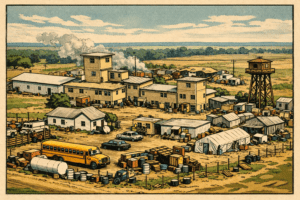
His parsimony was not merely a personality trait. It defined the household in which his two daughters grew up. The Bordens lived at 92 Second Street, a modest wooden house in a working-class neighbourhood several blocks below The Hill, the elevated district where Fall River’s mill-owning elite kept their mansions. The house had no bathroom — chamber pots were emptied into a slop bucket — no proper heating, no gas lighting in much of the building, and an arrangement of interconnecting rooms with locked doors and no upstairs hallway that would, in due course, become significant. Andrew Borden could have afforded any house in Fall River. He chose to live in a house his daughters considered an embarrassment, in a neighbourhood they considered beneath them, while keeping his money in his banks.
Lizzie Andrew Borden was thirty-two years old in the summer of 1892. She had been born on 19 July 1860, the second daughter of Andrew and his first wife, Sarah Morse, who had died of uterine congestion when Lizzie was two. Two years later Andrew had married Abby Durfee Gray, a thirty-seven-year-old spinster who had become, for thirty years thereafter, the only mother Lizzie ever effectively knew. Lizzie’s elder sister Emma, ten years her senior, had taken on a parental role to her younger sister during the period between Sarah’s death and Andrew’s remarriage, and the bond between the two sisters would last their entire lives.
Lizzie was, by every contemporary account, an unmarried, comfortable, deeply respectable young woman. She taught Sunday school at the Central Congregational Church. She was a member of the Christian Endeavour society and of the local Women’s Christian Temperance Union. She had recently completed a Grand Tour of Europe with friends — the kind of trip that was, in 1890s Fall River, the standard finishing experience for daughters of the city’s better families. She had, by 1892, returned to the Second Street house and resumed a life that, on its surface, was as quiet and conventional as any in Massachusetts.
Underneath the surface, however, the household was not happy. Lizzie and Emma had increasingly resented their stepmother — not, by any account, because Abby had been cruel to them as children, but because they perceived her in adulthood as a woman who had married their father for his money and who was now slowly redirecting that money toward her own Gray relatives. The specific grievance that had crystallised the resentment in 1887 was Andrew’s gift of a house on Fourth Street to Abby’s half-sister Sarah Whitehead. The transaction was, in Andrew’s mind, family business of an ordinary kind. To Lizzie and Emma, it was the moment they understood that their father’s estate was being eroded toward people they considered outsiders. From that point on, Lizzie stopped calling Abby “mother.” She called her “Mrs Borden.”
By the early summer of 1892, the household tensions had become severe enough that Lizzie and Emma had begun spending extended periods away from Second Street — visits to friends in nearby New Bedford and Marion, weekends at the family farm in Swansea. Emma had been away for several weeks at the time of the murders. Lizzie had returned to Second Street from her own trip to Marion only a few days before the morning of 4 August.
Part Two: The Week Before
The week leading up to the murders was, in retrospect, full of small incidents that prosecutors would later argue formed a pattern. Some of them did. Others were probably coincidences. Distinguishing between the two has been, for 130 years, the central interpretive challenge of the case.
On the morning of Tuesday, 2 August, Andrew, Abby, and Lizzie were all suddenly and violently ill. They vomited through the night. Abby, frightened, walked across the road to consult the family physician, Dr Seabury Bowen, telling him she believed someone might be poisoning the family. Bowen examined her, found nothing alarming, and sent her home with a recommendation to rest. The illness was attributed at the time to spoiled mutton or contaminated milk, both of which were credible explanations in pre-refrigeration August. The illness had largely passed by the following day.
On the afternoon of Wednesday, 3 August, Lizzie walked into the chemist’s shop of D. R. Smith on South Main Street and asked to buy ten cents’ worth of prussic acid. Prussic acid — hydrogen cyanide — was occasionally used in the cleaning of sealskin capes, which Lizzie said was her purpose. The chemist, Eli Bence, declined to sell it to her without a prescription, as the law required. Lizzie left. The encounter would, in due course, become one of the most contested pieces of evidence in the case. The trial judges eventually excluded Bence’s testimony from the jury, on the grounds that the prosecution had not adequately established a link between the attempted purchase and the means of death.
On the evening of Wednesday, 3 August, Andrew Borden’s brother-in-law, John Vinnicum Morse — the brother of Lizzie’s late mother Sarah — arrived at 92 Second Street for an unannounced overnight visit. Morse was a frequent enough guest that his appearance was not extraordinary, but the timing would later attract attention. He stayed in the guest bedroom on the second floor, the same room in which Abby Borden’s body would be found the following morning.
On the same evening, Lizzie called on her friend Alice Russell at her home several blocks away. She told Alice she was worried. Someone, she said, had been trying to harm the family. She referenced the recent illness. She referenced an anonymous note she said had been left at the house. She wondered aloud whether Andrew’s business enemies might be planning something. She spoke, by Alice Russell’s later testimony, in terms that suggested she was building, in advance, a narrative of external threat.
The household retired late that evening. The maid, Bridget Sullivan — known to the family as “Maggie,” a generic nickname they had carried over from a previous Irish servant — slept in the small third-floor room directly above Lizzie’s bedroom. John Morse slept in the upstairs guest room. Andrew and Abby slept in the master bedroom on the second floor, accessible only through the guest room or by a connecting back staircase. Lizzie slept in her own bedroom on the second floor. Emma was away in Fairhaven. The house, at midnight on the third of August, contained five people, three of whom were going to play a part in what happened the following morning.
Part Three: The Morning of 4 August
The morning was hot. The temperature in Fall River that day reached the mid-eighties, and the Borden house, with its closed windows and dark furnishings, was stifling. Bridget Sullivan rose at around 6:15 a.m. and lit the kitchen stove to begin breakfast. The family came down one by one. They ate a breakfast that included the cold mutton that had probably caused the previous day’s illness — Andrew was, his children later said, congenitally unable to throw food away. By 8:45 a.m., breakfast was over. John Morse left the house at approximately 8:48 a.m., walking to visit other relatives across town. Andrew Borden, dressed in a dark suit despite the heat, left at approximately 9 a.m. to go down to the city to attend to business at his banks.
Abby Borden went upstairs at approximately 9:30 a.m. to change the pillowcases and make the bed in the guest room where John Morse had slept. She climbed the front staircase. She did not come down.
Sometime between 9:30 and 10:30 a.m. — the medical evidence later placed it at the earlier end — Abby Borden was attacked in the guest room. The first blow probably came from behind, as she was bending over the bed. She was struck in the side of the head, fell forward, and was then struck again as she lay face down on the floor between the bed and the bureau. The attacker continued to strike her, in a frenzy that the autopsy would later show comprised nineteen separate blows from a hatchet, all of them landing on her head and the back of her neck. The blood pool spread under her body. The attacker washed, presumably in the basin in the guest room, and left.
Bridget Sullivan, downstairs, had been instructed by Abby earlier that morning to wash the outside windows. She did so. Lizzie, by her own subsequent account, was in the kitchen, in the dining room, and at one point in the cellar privy. She did not, by her own account, hear anything unusual from upstairs. She did not, by her own account, go upstairs.
Andrew Borden returned home at approximately 10:45 a.m. He had been unable to enter the back door, which he had found locked from the inside. He had then gone to the front door, where he was, by Bridget Sullivan’s later testimony, unable to enter using his key — the door appeared to have been locked from the inside with multiple bolts. Sullivan, washing the inside of the windows by this point, came to the front door to let him in. As she struggled with the locks, she heard Lizzie laugh, somewhere in the house above her. Sullivan would later say in her testimony that Lizzie was at the top of the front stairs at this moment — which meant Lizzie would have been able to see, from where she stood, directly into the open door of the guest room where Abby’s body lay on the floor. Sullivan let Andrew in. He sat down on the parlour sofa to rest. He removed his boots and put on his slippers — although it is worth saying that the crime scene photographs of his body show him in boots, a detail that has produced some inconclusive controversy over the years about the timeline.
What is not in dispute is what happened next. Andrew lay back on the sofa to nap. Sometime between approximately 10:55 and 11:10 a.m., he was attacked. The first blow came from above and behind, almost certainly delivered by an attacker standing behind the sofa. He was struck eleven times in the head and face with a hatchet. The blows were so violent that his face was reduced to what the responding officers would describe as a mass of unrecognisable tissue. His left eye was cut in half. His nose was severed. His skull was opened from the top of the forehead to the cheekbone.
At approximately 11:10 a.m. Lizzie called up the back stairs to Bridget Sullivan, who had retired to her third-floor room to rest after her morning’s work: Maggie, come down! Come down quick; Father’s dead; somebody came in and killed him.
Part Four: The Investigation
The response to the discovery was chaotic. Lizzie sent Bridget across the road for Dr Bowen. Then for her friend Mrs Churchill. Then for Alice Russell. Then for the police. Officers arrived within twenty minutes, but the scene by that point was full of neighbours, friends, and family doctors. The Fall River Police Department of 1892 was not a body equipped, by training or by procedure, to handle what it had walked into. Officers tramped through the parlour. The front and rear doors were opened repeatedly. The body of Andrew Borden remained on the sofa for hours before being moved. The discovery of Abby Borden was made by Mrs Churchill, who, struck by the question of where the lady of the house had got to, climbed the front staircase about half an hour after Andrew’s body had been found and saw, through the open door of the guest room, what was on the floor.
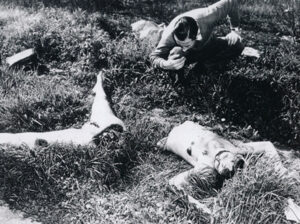
One of the earliest, and worst, decisions made at the scene was to conduct preliminary autopsies on the kitchen table at 92 Second Street. The bodies were laid out, photographed, and partially examined in the very dining room where the family had eaten breakfast that morning. The skulls were eventually removed for the trial — preserved as physical exhibits — and would later, in the prosecution’s most theatrical moment, be revealed to the jury during the closing arguments.
The Fall River police had no obvious suspect from outside the household. There were no signs of forced entry. Nothing of value had been taken. The hatchet head that the investigators eventually identified as the most probable murder weapon was found in the cellar — its handle had been broken off cleanly, and the head itself had been carefully wiped of blood and then rolled in ash to give it the appearance of long disuse. The handle was never found.
The household, under questioning, gave accounts that did not match. Bridget Sullivan had been outside or in her own room for the relevant periods. John Morse had been across town with relatives, and his alibi was unshakeable. Lizzie had been, by her own conflicting accounts, in the kitchen, in the dining room, in the barn loft eating pears, in the yard. She had told Officer George Allen that her stepmother had received a note that morning calling her to visit a sick friend; no such note was ever found, no sick friend ever materialised, and the messenger who would have delivered it was never identified. She had told the responding officers different accounts of her own movements during the period in which Abby must have been killed.
Three days after the murders, on the evening of Sunday 7 August, Alice Russell — who had been staying with Lizzie since the killings — walked into the Borden kitchen and saw Lizzie tearing up a blue dress and burning it in the kitchen stove. Lizzie told her she was getting rid of it because it had been stained with paint. Alice Russell said nothing at the time. She would, however, eventually tell the police, and her testimony about the burned dress would become one of the most damaging pieces of evidence the prosecution presented at trial.
Lizzie Borden was arrested on 11 August 1892, a week after the murders. She was indicted by a grand jury in December. Her trial began at the New Bedford courthouse on 5 June 1893.
Part Five: The Trial
The trial of Lizzie Borden was one of the most extensively covered legal proceedings in nineteenth-century America. Hundreds of reporters travelled to New Bedford. Sketches and dispatches were wired daily to newspapers across the country. The case became, almost from the first day, a national entertainment.
The prosecution case was conducted by District Attorney Hosea Knowlton and the future US Supreme Court Justice William H. Moody. Their theory was straightforward: Lizzie had killed Abby first, around 9:30 a.m., out of long-simmering resentment over Andrew’s gifts to Abby’s relatives; she had then waited approximately ninety minutes for Andrew to return home, attacked him as he slept on the sofa, and disposed of the murder weapon and her bloodied clothing in the intervening hours before raising the alarm. The opportunity, the motive, the physical proximity, the inconsistent statements, the burned dress, and the attempted prussic acid purchase the day before all pointed in the same direction.
The defence was conducted by former Massachusetts Governor George D. Robinson — a politician of significant local prestige who, before joining the defence team, had appointed one of the three justices who would now preside over the case. The defence theory was equally straightforward: a young woman of Lizzie Borden’s social class, religious conviction, and physical fragility was incapable of the kind of violence the murders required; there was no direct physical evidence linking her to the killings; an unknown intruder, perhaps a tradesman with a grudge against Andrew, was the more probable killer.
The trial, as it proceeded, was conducted in a manner that historians have generally regarded as substantially favourable to the defence. Several specific decisions by the three-judge panel proved critical.
The court excluded Eli Bence’s testimony about the attempted prussic acid purchase, on the grounds that the prosecution had not adequately established that poison had any connection to the manner of death. This was, by any reasonable reading, an unusual ruling. Evidence of a defendant attempting to acquire poison the day before her father and stepmother were killed is the kind of evidence that, in almost any other murder trial, would be considered relevant to questions of premeditation and state of mind regardless of whether the eventual murder weapon turned out to be a hatchet rather than a phial. The exclusion of Bence removed one of the prosecution’s most striking pieces of evidence.
The court also excluded Lizzie’s inquest testimony, in which she had given inconsistent accounts of her movements on the morning of the murders. The grounds for exclusion were that Lizzie had been effectively in custody at the time of the inquest without having been formally charged, and that her statements had therefore been obtained under conditions that compromised their voluntariness. The legal point was a defensible one but it again removed a substantial portion of what the prosecution had been relying on.
The jury was drawn from rural and small-town areas of Bristol County. Fall River itself, where the case had been most extensively reported and where local opinion was somewhat divided, was excluded from the jury pool. The result was a jury of farmers, tradesmen, and small-town shopkeepers — twelve middle-aged white men whose social distance from a respectable Sunday school teacher of Lizzie Borden’s profile was substantial, and whose disposition to believe such a person capable of axe murders was, by all subsequent accounts of the jury’s deliberations, sceptical from the outset.
The judge’s charge to the jury, delivered by Justice Justin Dewey, was so favourable to the defence that one major newspaper described it the following day as “a plea for the innocent.” Dewey emphasised the prosecution’s circumstantial case, reminded the jurors of Lizzie’s good character, and characterised the burden of proof in terms that some legal scholars have since argued went beyond the standard formulation.
The jury retired at 3:24 p.m. on 20 June 1893. It returned with its verdict at 4:32 p.m. — barely over an hour later. The verdict was not guilty. The courtroom erupted. Lizzie Borden, who had sat through the trial with composure that observers had variously described as remarkable, dignified, or unnervingly affectless, wept for the first time.
Part Six: Maplecroft
What Lizzie Borden did next was, in some respects, as revealing as anything that had happened during the trial. Within weeks of the acquittal, she and Emma used the substantial inheritance they had received from their father’s estate to purchase a fifteen-room mansion on French Street, in the elevated neighbourhood of The Hill that Andrew Borden, in his lifetime, had refused to live in. Lizzie named the house Maplecroft. She had her name carved on the granite step. She began to refer to herself as Lizbeth Borden. She bought servants, horses, paintings, a substantial library, and over the following years gave generously to the Animal Rescue League of Fall River, which she made the principal beneficiary of her will.
She did not, however, return to the social life she had left behind. The acquittal had ended the criminal case against her. It had not ended the moral case. Most of the Fall River society that had once accepted her now did not. Her Sunday school class did not invite her back. The Christian Endeavour society quietly let her membership lapse. The Central Congregational Church, which she had attended faithfully for years, became a building she no longer entered. The town’s better families, in the manner of nineteenth-century New England communities reaching unspoken consensus, simply stopped including her. She remained welcome at the homes of a small number of personal friends and at the theatres of Boston, where she developed in her later years a fascination with stage actresses and built, at one point, what appears to have been an intense personal friendship with the actress Nance O’Neil. The friendship caused enough public attention in Fall River that even Emma, who had lived alongside Lizzie at Maplecroft since the trial, eventually moved out in 1905 and never spoke to her sister again.
Lizzie continued to live at Maplecroft, alone except for servants, for the next two decades. She gave occasional interviews to friendly journalists. She maintained, in such interviews and in private correspondence, that she had not killed her father and stepmother and that she did not know who had. She read, walked, kept dogs, and travelled occasionally to Washington and to New York. She died on 1 June 1927 of pneumonia following gall bladder surgery, aged sixty-six. Her sister Emma died nine days later, at a friend’s house in New Hampshire. They were buried in adjacent plots in Oak Grove Cemetery in Fall River, next to the father and stepmother whom one or both of them had probably killed.
Part Seven: The Modern Consensus
The case has been investigated, written about, and argued over continuously for 130 years. The modern consensus among historians who have studied it carefully is that Lizzie Borden almost certainly murdered Andrew and Abby Borden.
The reasons for this conclusion are cumulative rather than singular. No piece of evidence is, on its own, conclusive. The pattern, when the evidence is taken as a whole, is.
The opportunity was hers. She was the only adult in the house during the period when both murders must have been committed, with the partial exception of Bridget Sullivan, whose movements at the relevant times were either directly witnessed (washing the outside windows during the period of Abby’s death) or whose access to the upstairs rooms was, by the geography of the house, more limited than Lizzie’s. John Morse was several miles away with witnesses. Emma was in Fairhaven with witnesses. No intruder was seen, no point of entry was identified, and the suggestion that some unknown person could have entered the house, killed Abby, hidden in the building for ninety minutes, killed Andrew, and then left without being seen requires a degree of luck and invisibility that the physical layout of 92 Second Street makes very difficult to credit.
The motive was hers, more clearly than anyone else’s. The deep family conflict over Andrew’s estate, the recent transfer of property to Abby’s relatives, Lizzie’s documented and worsening resentment of her stepmother, and Andrew’s known reluctance to disburse capital while alive — these were not abstract considerations. They were the specific material grievances that, in Lizzie and Emma’s lived experience, had been mounting for years. The size of the inheritance that flowed to the two sisters after the murders — approximately $300,000 in 1892 dollars, the equivalent of perhaps $10 million today — gives some measure of what was at stake.
The behaviour was hers. The pre-murder visit to Alice Russell with the anticipatory talk of poisoning and unspecified threats. The attempted purchase of prussic acid the day before. The inconsistent accounts of her own movements on the morning of the killings. The implausibility of her not having heard her stepmother fall — Abby’s body weight, falling onto a wooden floor immediately above the part of the house in which Lizzie said she was at the relevant time, would have produced a sound the maid heard from her own third-floor room. The burning of the blue dress three days after the murders, with the explanation that paint had stained it — paint stains that nobody else in the household, including the staff, could remember anyone noticing.
What the case lacks, even now, is the single physical fact that would close it definitively. There is no fingerprint, no surviving blood evidence, no recovered weapon with identifiable traces. The forensic methods of the 1890s could not have produced such evidence even if it had been collected, and the chaotic crime scene management at 92 Second Street meant that even by the standards of the time, evidence was destroyed or contaminated. The hatchet head in the cellar may have been the weapon or may not have been. The burned dress may have been the killer’s dress or may, just conceivably, have been an ordinary dress disposed of in unfortunate timing. The questions that fascinated newspaper readers in 1893 will fascinate them in 2126, because the answers were never put on the record.
The acquittal stands. As a matter of legal fact, Lizzie Borden was, in June 1893, found not guilty of the murders of her father and stepmother, and that finding has the full weight that any criminal acquittal carries. Massachusetts never charged anyone else with the killings — there was no-one else to charge — and the case was, as a matter of law enforcement, formally closed when Lizzie left the courthouse.
But the legal acquittal and the historical conclusion are different categories. The legal acquittal is the outcome of a process designed, properly, to err on the side of doubt. The historical conclusion is the outcome of a different process, designed to weigh evidence on the balance of probabilities accumulated over more than a century. By that process, the most plausible reconstruction of 4 August 1892 is that a thirty-two-year-old unmarried Sunday school teacher, with a long-standing grievance against the stepmother who had displaced her in her father’s affections and the father who had failed to disburse her inheritance, picked up a hatchet in the early hours of an August morning and used it on the two of them.
Part Eight: The Names That Matter
Andrew Jackson Borden was seventy years old. He had built, from nothing, a financial empire that made him one of the most prosperous men in Fall River. He had been frugal to the point of meanness with his family. He had also been, by every available account, a competent banker, an honest businessman, and a man of his church. He died on a sofa in his own parlour, having removed his boots to rest from the heat of an August morning, struck eleven times in the head with a hatchet by someone who had been close enough to him, at the moment he closed his eyes, that he would not have seen the blow coming.
Abby Durfee Borden was sixty-four years old. She had raised the two Borden daughters from the time Lizzie was four. She had, by every available account, attempted to be a good stepmother to two girls who had not particularly wanted one. She had spent the morning of her death changing the pillowcases in a guest room because that was the kind of household task she habitually performed without complaint. She was struck nineteen times in the head and neck by an attacker who began at her back and continued after she was face down on the floor.
The popular memory of the case has tended, over 130 years, to remember the murderer and forget the murdered. Both of the Bordens deserve, at the minimum, to be named alongside the figure who almost certainly killed them.
A Final Note
The house at 92 Second Street still stands. It has been a bed and breakfast for some decades and is open to overnight guests who wish to sleep in the room where Abby Borden died, or who wish to take their breakfast in the dining room where the autopsies were performed. The current owners offer guided tours. The chairs in the parlour are positioned approximately where Andrew Borden’s sofa stood. The pearl-handled letter opener that Lizzie had carried in her dress pocket on the morning of the murders is on display in a glass case.
Maplecroft, the French Street mansion that Lizzie bought after her acquittal, has changed hands several times in the past decade and is privately owned. The current owners have, by reports, restored much of the period interior. The granite step with Lizzie’s chosen name still reads MAPLECROFT. The graves in Oak Grove Cemetery are open to visitors, though there is no marker on Lizzie’s plot acknowledging the case, only her name and her dates.
The Lizzie Borden case is, in many ways, the foundational American true crime story. It has the gothic house, the respectable middle-class murderer, the inconclusive trial, the acquittal that satisfied nobody, the long unhappy life of the suspected killer in the community that could not forget. It has produced operas, ballets, plays, films, novels, and a children’s nursery rhyme that almost every American schoolchild can still recite. It is the case that, more than any other, demonstrates what is possible when a competent defence team, a sympathetic judge, a carefully selected jury, and a defendant whose social profile makes guilt seem unthinkable combine in the face of evidence that, on any honest reading, points overwhelmingly in one direction.
What it does not have is a single moment of confession, a single sentence of admission, a single document in Lizzie Borden’s own hand that says what happened in the second-floor guest room and the downstairs parlour on the morning of 4 August 1892. She took whatever truth she knew to her grave at Oak Grove. The rest of us are left with the inheritance: a famous rhyme that gets almost every detail wrong, a tourist destination on Second Street, a small marker in Oak Grove Cemetery, and the slow accumulated weight of 130 years of historians, lawyers, journalists, and amateur detectives almost all concluding the same thing.
She probably did it. The jury said she didn’t. Both statements have been true for 132 years and will probably continue to be true forever.