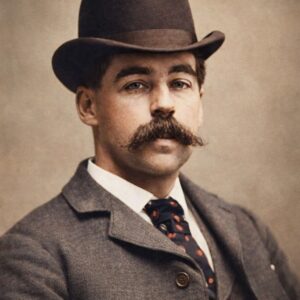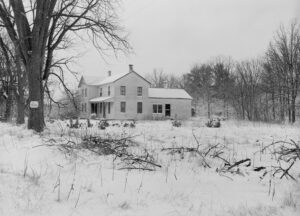
For thirteen months between July 1976 and August 1977, a man with a .44 calibre revolver shot couples in parked cars across the outer boroughs of New York City. He killed six people and wounded seven. He wrote letters to the police and to the press signed “Son of Sam,” and he was caught in the end not by careful investigative work but by a parking ticket. This is the full story of David Berkowitz, the city he terrorised, and the conspiracy theory that has never quite gone away.
Part One: The Boy from the Bronx
David Richard Berkowitz was born on 1 June 1953 in Brooklyn to a young unmarried woman named Betty Broder. She gave him up for adoption within days. He was taken in by Nathan and Pearl Berkowitz, a middle-aged Jewish couple who ran a hardware store in the Bronx and who had been unable to have children of their own. They named him David and raised him as their son. They told him, in keeping with the practice of the era, that his birth mother had died in childbirth.
By every contemporary account, the Berkowitz home was a loving one. Nathan and Pearl doted on David. They lived in a modest apartment in Soundview, a working-class neighbourhood in the East Bronx. David was a difficult child — hyperactive, prone to tantrums, struggling to make friends — but the difficulties were of the kind that thousands of post-war American families coped with without thinking they had anything alarming on their hands. He was bright, he did adequately at school, and he was, as far as anyone in his family or neighbourhood could see, an ordinary if somewhat awkward Bronx boy.
The first significant turn in his life came in 1967, when he was fourteen. Pearl Berkowitz, the adoptive mother he had been particularly attached to, was diagnosed with breast cancer. She died within a year. The death of his mother, in the assessment of every psychiatrist who later examined Berkowitz, was the event that began the long process of his psychological deterioration. He withdrew from his father, who he later said he had never been as close to. He became increasingly solitary. He began to wander the Bronx at night, lighting small fires — a habit that would, by his own later admission, escalate into hundreds of arsons through his late teens and early twenties.
The second turn came in 1971, when Berkowitz was eighteen. He joined the United States Army. The Army was the kind of structured environment that, for many directionless young men of his era, provided a temporary scaffold for a life that might otherwise have collapsed entirely. He served for three years, including a posting to South Korea. He was, by official assessment, an indifferent soldier, but with one noteworthy distinction: he qualified as a sharpshooter on the firing range. The .44 calibre revolver was not yet in his life, but the skill that would later make him terrifying with it was, by 1974, well established.
The third turn came shortly after his discharge from the Army in June 1974. He set out to find his biological mother. He succeeded — Betty Broder was living in Brooklyn, had remarried, and had an adult daughter, Berkowitz’s biological half-sister, who he met. The reunion was, on the face of it, a positive one. Underneath, by his later accounts, it was devastating. The story he had been told as a child — that his mother had died in childbirth — was a lie. His biological mother had simply chosen not to keep him. He learned, in the course of the reunion, that he had been the product of an affair, that his biological father had been a married man, and that Betty’s decision to give him up had been a matter of social convenience rather than necessity. Berkowitz, who had already been struggling psychologically, took the news as a confirmation of fundamental personal worthlessness. He stopped visiting his biological family. He moved into an apartment alone. The fires intensified. By his diaries, which would later be recovered from his apartment, he claimed to have set more than 1,400 of them across the New York metropolitan area between 1974 and 1977. Investigators were eventually able to confirm hundreds of these.
Part Two: The First Attacks
The first attack now generally attributed to Berkowitz was not a shooting. On the evening of Christmas Eve 1975, fifteen-year-old Michelle Forman was walking home in the Co-op City neighbourhood of the Bronx when a man approached her with a hunting knife and stabbed her six times. She survived. She gave investigators a description that did not, at the time, lead anywhere. Berkowitz himself would later admit to the attack and to one other knife assault that evening on a fifteen-year-old girl named Concetta Imperato, who escaped with light injuries. The use of a knife, rather than the firearm that would define his later attacks, marked these as a kind of rehearsal. He found the experience, he later said, unsatisfying. Knives required too much intimacy. He wanted, in his terms, more distance.
In the early months of 1976, Berkowitz purchased a Charter Arms .44 calibre Bulldog revolver from a friend who had moved to Houston. The Bulldog was a short-barrelled five-shot revolver, light enough to conceal under a jacket, powerful enough at close range to be reliably fatal. It was not a common civilian firearm in 1970s New York. It would become, over the following thirteen months, the most famous handgun in the city.
The first shooting took place in the small hours of 29 July 1976. Donna Lauria, eighteen, an emergency medical technician, and Jody Valenti, nineteen, a student nurse, were sitting in Valenti’s parked Oldsmobile outside Lauria’s apartment building on Buhre Avenue in the Pelham Bay neighbourhood of the Bronx. It was approximately one o’clock in the morning. They had been at a disco together earlier in the evening and were finishing a conversation before saying goodnight. A man approached the passenger side of the car, took out a paper bag, removed a handgun from inside it, and fired five times through the open window. Lauria was struck in the neck and died almost instantly. Valenti was hit in the thigh and survived. The shooter walked away. No motive was apparent. The two women had not seen the man before.
The NYPD treated the killing, initially, as a one-off. Donna Lauria’s father was a Teamsters official with significant local profile; investigators considered whether the attack might be related to organised crime business. None of the leads developed. The case went into the active but quiet phase that hundreds of New York City homicides did in those years.
Three months later, on the night of 23 October 1976, Carl Denaro, twenty, and Rosemary Keenan, eighteen, were sitting in Keenan’s Volkswagen outside a tavern in the Flushing neighbourhood of Queens. A man approached the car and fired four shots through the closed rear window. Denaro was struck in the head; he survived but lost a portion of his skull, which was later replaced with a metal plate. Keenan, miraculously, was uninjured. Ballistics evidence linking the shooting to the Lauria killing was not initially available because none of the bullets in the Denaro attack remained intact enough for matching.
On 26 November 1976, two more young women were shot at close range in front of a house in the Floral Park neighbourhood of Queens. Donna DeMasi, sixteen, and Joanne Lomino, eighteen, had been walking home from a movie. A man approached them, asked them for directions in what one of them later described as a high-pitched, almost childlike voice, and then drew a handgun and shot both of them. DeMasi was struck in the neck. Lomino was struck in the back and rendered paraplegic. Both survived. Neither could provide an identification that, at the time, advanced the case.
It was the fourth attack, on 30 January 1977, that began the police synthesis of what was actually happening. Christine Freund, twenty-six, and her fiancé John Diel, thirty, were sitting in Diel’s car in Forest Hills, Queens, after leaving a screening of Rocky. A man approached the passenger side. He fired three shots. Freund was hit twice and died several hours later in hospital. Diel survived. A bullet recovered from the scene was intact enough to match. It came from the same .44 calibre revolver that had killed Donna Lauria.
For the first time, the NYPD had ballistic confirmation that a single shooter was operating across multiple boroughs. By March 1977 — after the murder on 8 March of Virginia Voskerichian, nineteen, a student at Columbia University, shot in the face on a Forest Hills street — the department announced publicly that a serial killer was at large in New York City. The “Operation Omega” task force was formed. It eventually grew to more than three hundred officers, the largest single homicide investigation in the city’s history.
Part Three: The Letters
What turned the case from a serial killing into a citywide phenomenon — and what set Berkowitz apart from almost every other American serial killer of his era — was his decision to write.
On the night of 17 April 1977, eighteen-year-old Valentina Suriani and twenty-year-old Alexander Esau were sitting in Suriani’s car in the Bronx, kissing. A man approached and fired four times through the windscreen. Both were killed. At the scene, NYPD officers found a handwritten note on the pavement near the car, addressed to Captain Joseph Borrelli of the Omega task force. The note had been left, apparently, in the moments after the shooting. It read, in part:
Dear Captain Joseph Borrelli, I am deeply hurt by your calling me a wemon hater. I am not. But I am a monster. I am the “Son of Sam.” I love to hunt. Prowling the streets looking for fair game — tasty meat. The wemon of Queens are prettyist of all.
The note went on for several paragraphs in a similar register: misspelled, theatrical, alternately self-pitying and grandiose, signed Son of Sam. It explained, in terms that were not really an explanation at all, that the writer was being commanded to kill by a figure he called “Father Sam.” It threatened more attacks. It introduced into American criminal history the moniker by which the killer would be known for the rest of the case and ever afterwards.
The NYPD made the strategic decision to release portions of the letter to the press. Whether this was the right decision has been debated ever since. On the one hand, it gave the city specific information that might generate tips. On the other hand, it gave the killer exactly what he wanted — public attention, the front pages, a place in the imagination of millions of New Yorkers. The “Son of Sam” nickname appeared in headlines within hours.
The second letter, posted in late May 1977, was sent not to the police but to Jimmy Breslin, the celebrated columnist for the New York Daily News. The Breslin letter was longer, more articulate, and clearly written with an awareness that it would be widely read. It opened with the line that would be quoted for years: Hello from the gutters of N.Y.C. which are filled with dog manure, vomit, stale wine, urine and blood. It namechecked the previous victims. It taunted the police. It hinted at further killings. Breslin and the Daily News consulted with the NYPD and the FBI’s Behavioral Science Unit before deciding to publish, in part, on 4 June 1977. The decision to publish was controversial then and remains so now. What is undeniable is that it sold approximately 1.1 million extra copies of the Daily News on the day it appeared, and that it raised the profile of the case to a height that no New York murder investigation had previously reached.
By the summer of 1977, New York was a city in a state of low-grade collective panic. Young women dyed their hair from brunette to blonde — Berkowitz’s victims had so far been overwhelmingly dark-haired — and stayed indoors at night. Discos and bars in the outer boroughs reported sharp drops in attendance. Couples avoided parked cars on the street. The heatwave that gripped the city through July, combined with the citywide blackout of 13 July 1977 and the looting that accompanied it, produced an atmosphere that has been described in retrospect as the closest New York came in the modern era to feeling like a city sliding into ungovernability. The phrase “Summer of Sam” attached itself to the period almost in real time.
Berkowitz, working from his apartment in Yonkers, watched the coverage and continued to plan. On 26 June 1977, he shot and wounded Sal Lupo, twenty, and Judy Placido, seventeen, who were sitting in a car in Bayside, Queens, after leaving a disco. Both survived. On the night of 30–31 July 1977 — exactly one year and one day after the Donna Lauria killing — he shot Stacy Moskowitz, twenty, and Robert Violante, twenty, in a parked car beside a park in Bensonhurst, Brooklyn. It was the first attack in Brooklyn, and Moskowitz was the first blonde victim. Moskowitz died in hospital the following day. Violante survived but lost most of his sight.
The Moskowitz killing was the one that finally broke the case.
Part Four: The Parking Ticket
It is one of the most famous accidental endings to a manhunt in American criminal history. On the night of the Moskowitz shooting, a woman named Cacilia Davis had been walking her dog near the Bensonhurst park where the attack took place. As she walked, she noticed a young man in a sports jacket who appeared to be staring at a parked car. She also noticed, with mild irritation, that the police were ticketing cars in the area for parking too close to a fire hydrant. She went home. About ten minutes later, she heard the gunshots that killed Stacy Moskowitz.
It took Davis several days to come forward with what she had seen. When she did, in conjunction with another witness, NYPD detectives began the routine work of cross-checking the parking tickets that had been issued in the immediate area that night. There had been four. Three of them were quickly cleared. The fourth had been issued to a 1970 Ford Galaxie 500 registered to a David Berkowitz of Pine Street, Yonkers.
The Yonkers address rang a separate bell. Berkowitz had, for months, been the subject of harassment complaints from a neighbour named Sam Carr, whose Labrador retriever Berkowitz had shot and wounded in late April. Carr’s son, John, had told the Yonkers police that Berkowitz had been writing strange letters to the Carr family for some time. The Yonkers police had not connected any of this to the Son of Sam case.
On the afternoon of 10 August 1977, NYPD detectives drove to Pine Street in Yonkers. They located Berkowitz’s car parked on the street outside his apartment building. Through the window of the Galaxie, the lead detective, John Falotico, saw a rifle on the back seat and a paper bag from which the handle of a handgun was protruding. Berkowitz emerged from the building at approximately 10 p.m., carrying another paper bag. The detectives approached him.
Berkowitz did not resist. He looked at Falotico and, by Falotico’s later account, smiled. He said, in a flat voice: Well, you got me. Then, after a pause: What took you so long?
Inside the paper bag was the .44 calibre Bulldog revolver. In Berkowitz’s apartment, detectives found maps marked with the locations of the shootings, diaries detailing the arsons and the killings, and walls covered in handwritten graffiti — invocations of demons, references to Father Sam, fragments of song lyrics, paranoid theological speculations. The apartment was, by every account of the officers who entered it, the room of a person who had been deeply mentally ill for a very long time.
Berkowitz told the arresting officers, that night and over the following days of interrogation, that he had been planning a final attack — a mass shooting at a Hamptons nightclub later that month, intended to end in what he called a “blaze of glory.” Whether this was bravado or a real plan has never been determined, but the rifle in the back seat of the Galaxie was suggestive.
Part Five: The Trial That Wasn’t
There was, in the end, no trial. On 8 May 1978, after months in which his court-appointed psychiatrists had argued that he was not fit to stand trial, Berkowitz withdrew his planned insanity defence and pleaded guilty to all six murders. He was sentenced to six consecutive twenty-five-years-to-life terms — a total of 365 years’ imprisonment, with parole eligibility after twenty-five years. He has been incarcerated continuously since August 1977. He is currently held at Shawangunk Correctional Facility, a maximum-security prison in Ulster County, New York.
The guilty plea closed the case officially but, in some ways, made it less satisfying as a matter of public record. There was no trial transcript. There was no extended cross-examination of Berkowitz on the witness stand. There was no detailed forensic and psychological reconstruction of the kind that a contested trial would have produced. What the public had instead was a series of statements from Berkowitz himself — the original “Father Sam” demon story he had given on the night of his arrest, which he repeated in his early prison interviews and which was widely accepted as the explanation for his behaviour.
By the late 1970s, Berkowitz had abandoned this explanation. The demon story, he eventually said, had been an invention designed to support an insanity defence that he had ultimately not pursued. In his current account — which he has given consistently in interviews since the 1990s — he killed because he was, in his terms, a profoundly damaged young man whose loneliness, resentment of women, and untreated psychiatric symptoms had combined into a pattern of escalating violence. He has, since the late 1980s, also described himself as a born-again Christian and has expressed extensive public remorse for his crimes. The remorse is, by most accounts of those who have interviewed him, genuine in expression, though what it actually amounts to as a matter of internal moral reckoning is something only Berkowitz himself can know.
He has been eligible for parole since 2002. He has been considered and rejected at every hearing — eleven times as of the most recent reviews. He has, at multiple hearings, declined to make a personal case for release, telling the board that he accepts the gravity of his crimes and does not consider himself entitled to freedom. The board has consistently agreed. He will, in all likelihood, die in prison.
Part Six: The Cult Theory
No account of the Son of Sam case is complete without addressing the conspiracy theory that has, in some quarters, replaced the official account.
The theory’s chief author was an investigative journalist named Maury Terry, who began looking at the case shortly after Berkowitz’s arrest. Terry was struck by what he considered inconsistencies: the eyewitness descriptions of the shooter at different attacks did not always match Berkowitz, who in some cases appeared too short, too thin, or to have the wrong hair colour. The shots that had killed some of the victims came from angles that, in Terry’s analysis, would have been difficult for Berkowitz to produce alone. The presence at several scenes of a yellow Volkswagen, which was not Berkowitz’s car, was never satisfactorily accounted for. Witnesses had described, at certain attacks, the presence of multiple men.
Terry’s eventual theory, developed across more than a decade of investigation and published in his 1987 book The Ultimate Evil, held that Berkowitz had not acted alone but had been a member — and one of several shooters — of a satanic cult operating out of Yonkers. The cult, in Terry’s reconstruction, was connected to the Process Church of the Final Judgment, an English-American religious movement of the 1960s and 1970s that had been the subject of significant controversy and that some critics had linked, on slim evidence, to the Manson Family. Terry argued that several of the killings had been carried out by other cult members, that the Carr brothers (John and Michael, sons of the dog-owning Sam Carr) had been involved, and that the broader network of satanic ritual activity that he believed lay behind the killings was responsible for numerous other unsolved murders across the United States.
The theory has had a remarkable cultural afterlife. Terry was respected as a journalist and produced extensive documentation. Berkowitz himself, in prison interviews with Terry through the late 1980s and 1990s, increasingly endorsed elements of the theory — admitting that he had been involved with what he called “the cult” and that other shooters had been responsible for some of the attacks attributed to him. The Queens District Attorney’s office reopened aspects of the case in the late 1990s based on Terry’s work. Berkowitz was interviewed multiple times by official investigators. None of these efforts produced a successful prosecution. The Carr brothers were both dead by the early 1980s — John in suspicious circumstances in North Dakota in 1978, Michael in a car crash in 1979 — and could not be interviewed.
In 2021, Netflix released a four-part documentary series, The Sons of Sam: A Descent into Darkness, based on Terry’s files. The series brought Terry’s theory to a new and very large audience and gave the cult interpretation more cultural prominence than it had enjoyed in decades.
What to make of all this is the central interpretive question of the case as it now stands. There are several positions a careful reader can take.
The first is to accept Terry’s theory in full. This is the position of a small but committed cohort of researchers, journalists, and amateur sleuths who have spent decades on the material and who find the eyewitness inconsistencies and the Berkowitz prison statements sufficient to overturn the official account. The Netflix series leans, on balance, toward this view.
The second is to reject Terry’s theory in full. This is the position of most mainstream criminologists, of the NYPD detectives who actually worked the case, and of most academic historians of American crime. On this view, Berkowitz was a lone, profoundly disturbed young man whose statements about cult involvement were the latest in a long series of self-mythologising fabrications, and whose prison endorsements of the Terry theory were a way of recovering some of the centrality the case had given him and that imprisonment had taken away. The eyewitness inconsistencies, on this reading, are the ordinary inconsistencies of eyewitness testimony in high-stress nighttime situations — every serial case has them — and do not require a cult to explain them.
The third, and probably the most honest, is to sit with genuine uncertainty. The case was officially closed almost fifty years ago. The physical evidence was processed by 1970s forensic methods. Most of the key witnesses are now dead. The possible accomplices, if they existed, are dead. Berkowitz’s own statements have shifted so often, and with such evident self-interest in each shift, that they cannot be relied on. What can be said with confidence is that Berkowitz fired at least some of the shots and was present at least at the scenes for which physical evidence linked him directly. Whether he was the only shooter is a question on which the available evidence, half a century later, no longer permits a definite answer.
The temptation, particularly for a true crime audience, is to find the cult theory irresistible. It is more dramatic. It connects to the 1980s satanic panic, to the Manson Family, to the perennial American fascination with hidden networks of evil. The official account — that a profoundly lonely young man with a Bulldog revolver shot New Yorkers because he was psychotic and resentful and had not been treated — is duller. It is also, almost certainly, closer to the truth.
Part Seven: The Names That Matter
The dead were:
Donna Lauria, eighteen, an emergency medical technician from the Bronx. She had wanted to be a paramedic.
Christine Freund, twenty-six, a Queens secretary engaged to be married. Her engagement ring was on her finger when she died.
Virginia Voskerichian, nineteen, a Barnard College student studying Russian literature. She had been walking home in Forest Hills with a textbook in her hand when she was shot. The textbook, raised at the last moment in front of her face, did not stop the bullet.
Valentina Suriani, eighteen, a Lehman College student.
Alexander Esau, twenty, a Manhattan tow-truck driver. He and Valentina had been dating for several months.
Stacy Moskowitz, twenty, a Brooklyn secretary. She had been on her first date with Robert Violante. They had been to see the film Annie Hall. They had been kissing in the car. Stacy died approximately eighteen hours after the shooting.
The wounded — Jody Valenti, Carl Denaro, Joanne Lomino, Donna DeMasi, John Diel, Sal Lupo, Judy Placido, Robert Violante — built the rest of their lives in the long shadow of what Berkowitz had done to them. Joanne Lomino has used a wheelchair since 1976. Robert Violante, who lost most of his sight in the Moskowitz attack, became a public speaker on gun violence and victims’ rights in his later life and has said in multiple interviews that he forgave Berkowitz long ago because the alternative was to spend his life held hostage by a man he barely remembered. He died in 2018. Carl Denaro, who took a bullet to the skull and survived with a metal plate, has been one of the most articulate public voices on the case for decades, including substantial engagement with the Terry theory. He has continued to argue, on the basis of his own memory of the shooting, that the shooter who attacked him was not David Berkowitz.
A Final Note
The Son of Sam case occupies a particular place in the cultural memory of the United States. It happened during the most chaotic and visually photographable period of late-twentieth-century New York. It produced letters that read like the script of a horror film. It targeted ordinary young people in ordinary cars on ordinary nights. It ended with a parking ticket. The combination has proven durable enough that nearly fifty years later the case remains, alongside the Zodiac killings and a small handful of others, the American serial murder case that the broader culture has been least willing to put down.
David Berkowitz himself is now in his early seventies. He has spent more than two-thirds of his life in prison. He continues to write to those who write to him. He continues to express, in interviews and correspondence, what appears to be genuine religious remorse for what he did. He has declined every opportunity to advocate for his own release. He will, in all probability, die at Shawangunk or at whatever upstate facility he is finally moved to.
The families of the six people he killed are now mostly elderly. Some are gone. Those who remain have lived for nearly fifty years with the fact of a daughter or sister who was, in some cases, eighteen years old when a stranger walked up to a parked car at one in the morning and ended her life for reasons that no available account — not the demon story, not the cult theory, not the official lone-killer interpretation — entirely makes sense of. The case will, eventually, pass entirely out of living memory. The dead will then have to be remembered, if at all, by people who did not know them and never will. That work, as much as anything else, is what writing carefully about cases like this is for.
The Summer of Sam is now, by any reasonable measure, history. The names of the dead deserve to be the part of it that lasts.