Few names in true crime carry the weight of Theodore Robert Bundy. He has been called handsome, charming, articulate — adjectives that, applied to a man who confessed to thirty murders, still unsettle. This is the full account: who he was, what he did, who he took, how he was caught, and what the men and women who studied his mind eventually concluded.
Part One: A Boy Called Ted
Theodore Robert Cowell was born on 24 November 1946 in a home for unmarried mothers in Burlington, Vermont. His mother, Eleanor Louise Cowell, was twenty-two and unwed — a circumstance that, in 1940s America, carried a stigma the family went to extraordinary lengths to hide. For the first years of his life, Ted was raised by his maternal grandparents in Philadelphia and told that his mother was his older sister. Whether he ever fully accepted the eventual correction of that lie is one of the smaller mysteries his biographers have wrestled with.
In 1950, Louise moved Ted to Tacoma, Washington, where she married a hospital cook named Johnnie Bundy. Ted took his stepfather’s surname but never warmed to him. Johnnie was, by all accounts, a decent man who tried to bond with the quiet, watchful boy he had inherited. Ted preferred the company of his own thoughts.
Childhood accounts vary depending on who is telling them. Family members describe a bright, polite, somewhat shy child. Bundy himself, in later interviews, hinted at a darker undercurrent: an early fascination with knives, with images of violence, with the discarded magazines and detective pulp he claimed to have found in the neighbourhood. How much of this was honest reflection and how much was the self-mythologising of a death-row inmate constructing his own legend, no-one can now say for certain.
He did well at school. He was active in his church and his local Boy Scouts. He went on to the University of Washington in Seattle, where he eventually graduated with a psychology degree in 1972 — a credential that would later strike investigators as grimly appropriate. He was, on paper, the model of a young man on the rise.
Part Two: The First Confirmed Crimes
The question of when Bundy first killed has never been settled. He confessed, in the days before his execution, to murders that have never been matched to missing-persons reports. He hinted at victims in his teens. There is a long-held suspicion that an eight-year-old girl named Ann Marie Burr, who vanished from Tacoma in 1961 when Bundy was fourteen, was his first — a suspicion Bundy alternately stoked and denied throughout his life.
What investigators can say with confidence is that the confirmed killings began in Seattle in January 1974. His first known victim was eighteen-year-old Karen Sparks, a student at the University of Washington. Bundy broke into her basement apartment while she slept, beat her with a metal rod from her own bed frame, and sexually assaulted her with the same object. He left her for dead. She survived but suffered permanent brain damage. She remains one of the very few people to have lived through a Bundy attack.
Four weeks later, on 1 February 1974, twenty-one-year-old Lynda Ann Healy disappeared from her off-campus bedroom in Seattle. Her bed had been carefully remade. There was blood on the pillow. Healy was a popular psychology student who read the morning ski reports on local radio. Her remains were found a year later on Taylor Mountain, alongside those of other women.
From there, a pattern began to harden. Through the spring and summer of 1974, young women vanished from college campuses across Washington and Oregon: Donna Gail Manson, nineteen, from Evergreen State College in March; Susan Elaine Rancourt, eighteen, from Central Washington State in April; Roberta Kathleen Parks, twenty-two, from Oregon State in May; Brenda Carol Ball, twenty-two, last seen leaving a tavern in June; Georgann Hawkins, eighteen, taken from an alley behind her sorority house, also in June.
Part Three: Lake Sammamish
On 14 July 1974, Bundy did something that would, in retrospect, be the closest thing to a public unveiling. At Lake Sammamish State Park near Seattle — a sunny, crowded summer afternoon — he approached several young women with his arm in a fake sling, asking them to help him load a sailboat onto his car. Most declined. Two did not.
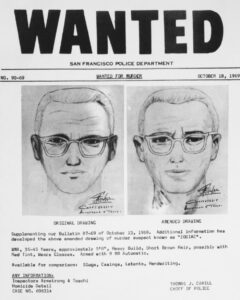
Janice Ott, twenty-three, vanished from the beach around midday. Denise Naslund, nineteen, disappeared a few hours later. Witnesses gave police a startlingly clear description: a clean-cut, good-looking white man in his mid-twenties, with brown hair, who had introduced himself as “Ted.” His Volkswagen Beetle was remembered too.
The composite sketch was circulated widely. Several people who knew Bundy — including his then-girlfriend Elizabeth Kloepfer — looked at it and felt a chill of recognition. She would later call police. So would others. But the tip went into a pile of thousands. Without a centralised database to flag the same name appearing repeatedly across jurisdictions, his name sat in the system, surfacing and resurfacing without ever rising to the top.
Part Four: Utah, Colorado, and a Survivor Who Would Not Be Silenced
In the autumn of 1974, Bundy enrolled at the University of Utah law school in Salt Lake City. The killings moved with him.
Between October 1974 and the summer of 1975, women vanished across Utah and Colorado: Nancy Wilcox, sixteen; Melissa Smith, seventeen, the daughter of a local police chief; Laura Aime, seventeen, last seen on Halloween night and only formally confirmed as a Bundy victim by the Utah County Sheriff’s Office in 2025; Debra Kent, seventeen; Caryn Campbell, twenty-three, taken from a Colorado ski resort; Julie Cunningham, twenty-six; Denise Oliverson, twenty-five; Lynette Culver, twelve; Susan Curtis, fifteen.
The break came not from any of these murders directly, but from a woman who refused to die. On 8 November 1974, eighteen-year-old Carol DaRonch was approached in a Salt Lake City shopping mall by a polite young man claiming to be a police officer. He told her someone had tried to break into her car and asked her to come with him to identify the suspect. She did. He drove her toward a remote area, then attempted to handcuff her. She fought. She got the door open. She ran into oncoming traffic and flagged down a passing car. She lived. And she remembered his face.
On 16 August 1975, a Utah Highway Patrol sergeant pulled over a Volkswagen Beetle driving suspiciously in the early hours. Inside, he found handcuffs, an ice pick, a crowbar, a ski mask, and pantyhose with eye holes cut into them. The driver was Theodore Robert Bundy. DaRonch identified him in a line-up. He was convicted of her kidnapping in March 1976 and sentenced to one to fifteen years in Utah State Prison.
Part Five: Two Escapes
While serving his Utah sentence, Bundy was charged with the murder of Caryn Campbell and extradited to Aspen, Colorado, in 1977. It was there that he gave investigators a humiliating preview of what kind of prisoner he intended to be.
On 7 June 1977, during a recess in pre-trial proceedings, Bundy — who had been allowed to use the courthouse law library to assist in his own defence — opened a second-floor window and jumped. He landed in some bushes, walked away, and remained free for six days before being recaptured in the mountains, exhausted and limping.
He used those six days to plan more carefully. On 30 December 1977, having spent months losing weight and studying the ceiling of his cell, he squeezed through a hole he had cut above a light fixture, dropped into the unoccupied apartment of the jail’s chief jailer, changed into the jailer’s clothes, and walked out the front door. By the time anyone noticed he was gone, he was already on a bus.
Part Six: Florida, Chi Omega, and Kimberly Leach
Bundy made his way south. By early January 1978, he had arrived in Tallahassee, Florida, and rented a room near the campus of Florida State University. He had no money, no plan beyond evading capture, and — according to his later admission — no remaining ability to control the impulse that had defined his adult life.
In the early hours of 15 January 1978, he entered the Chi Omega sorority house. Over the course of perhaps fifteen minutes, he attacked four women. Margaret Bowman, twenty-one, was strangled and beaten to death in her bed. Lisa Levy, twenty, was beaten, strangled, sexually assaulted, and bitten on the buttock and nipple — a bite mark that would later, in court, become one of the most decisive pieces of physical evidence against him. Karen Chandler and Kathy Kleiner, also in the house, were savagely beaten but survived. Within an hour, Bundy attacked another woman, Cheryl Thomas, in a flat eight blocks away. She also survived, though with lasting injuries.
Three weeks later, on 9 February 1978, he abducted Kimberly Diane Leach, twelve years old, from outside her junior high school in Lake City, Florida. She was his youngest confirmed victim. Her body was found in April in a derelict pig shed near Suwannee River State Park.
On 15 February 1978, a Pensacola patrolman named David Lee noticed a Volkswagen driving erratically and ran the plates. The car was stolen. The driver tried to flee on foot, then to fight, before being arrested. He gave a false name. Two days later, he admitted who he was.
Part Seven: The Trials
Bundy’s Florida trial for the Chi Omega murders began in June 1979 in Miami. It was the first criminal trial in American history to be televised nationally. Bundy — who had dismissed his attorneys and was representing himself — appeared to relish the attention. He cross-examined witnesses, including the officer who had found Lisa Levy’s body. He preened for the cameras. He passed notes. He flirted, by some accounts, with the female journalists in the gallery.
The prosecution’s case rested heavily on the bite mark on Lisa Levy’s body. A forensic odontologist matched the impression to a cast of Bundy’s teeth. The match was not perfect — bite-mark evidence has, in the decades since, been heavily criticised as a forensic discipline — but in 1979 it was considered powerful, and the jury accepted it.
On 24 July 1979, Bundy was convicted of the murders of Margaret Bowman and Lisa Levy, the attempted murders of the three surviving women, and the burglary of the sorority house. He was sentenced to death twice, plus 196 years.
His trial for the murder of Kimberly Leach began in Orlando in January 1980. During proceedings, in an act that was either calculated theatre or some private impulse only he understood, Bundy used an obscure Florida statute to formally marry his girlfriend Carole Ann Boone while she was on the witness stand. He was found guilty and sentenced to death a third time.
Part Eight: Death Row, the Interviews, and the Final Confessions
Bundy spent nearly a decade on Florida’s death row. During those years, he gave a long series of interviews — most famously to the journalists Stephen Michaud and Hugh Aynesworth, and later to the homicide detective Robert Keppel, who had hunted him in Washington. Bundy, who refused for years to admit guilt directly, agreed to discuss the killings only “in the third person”, as though analysing the behaviour of a hypothetical murderer. The transcripts are some of the strangest documents in the literature of crime.
In the days before his execution, with appeals exhausted, Bundy finally dropped the pretence. He confessed to thirty murders across seven states between 1974 and 1978. Investigators believe the true number is likely higher. Some bodies have never been found. Some confessions could not be matched to known cases. The full extent of what he did will probably never be known.
Theodore Robert Bundy was executed in the electric chair at Florida State Prison at 7:16 a.m. on 24 January 1989. He was forty-two years old. Outside the prison, a crowd had gathered to cheer. Some sold T-shirts.
Part Nine: The Question of Why
No discussion of Bundy is complete without an attempt to answer the question every reader eventually asks: what was wrong with him?
The honest answer, after fifty years of clinical analysis, is that there is no single label that fits. A 2010 study at the University of Kentucky, led by personality researcher Thomas Widiger, asked dozens of experts to retrospectively diagnose Bundy from the historical record. The consensus was that he met the diagnostic criteria for antisocial personality disorder — the modern clinical term for what is colloquially called psychopathy — and almost certainly for narcissistic personality disorder as well. Widiger and others have also pointed to traits consistent with sadism, necrophilia, and paraphilia.
The forensic psychologist Al Carlisle, who evaluated Bundy in Utah in 1976 before any of the murders had been proven, came to conclusions that would later look prophetic. He found a man whose outward charm masked profound emotional emptiness, who saw other people primarily as instruments for his own gratification, and who had constructed an elaborate false self to navigate a world he fundamentally did not feel part of.
What Bundy is not, in the clinical literature, is mad. He was not psychotic. He was not delusional. He understood, in every legal and moral sense, what he was doing and that it was wrong. He simply did not care — or rather, the care that would have stopped most people was, in him, replaced by appetite.
The childhood — the deception about his mother, the unstable early years, the difficult relationship with his stepfather — is often offered as explanation, but the honest scholarship resists drawing too straight a line. Plenty of children grow up in worse circumstances and do not become predators. What Bundy seems to demonstrate is that a particular combination of innate temperament and developmental experience can, in rare cases, produce something for which we still have no satisfactory name.
Part Ten: The Names That Matter
It is easy, in writing about a man like Bundy, to make him the story. He worked hard at that in life, and he largely succeeded in death. But the women he killed had their own stories, and any serious account owes them at least the dignity of being named.
The confirmed and convicted victims include Lynda Ann Healy, Donna Gail Manson, Susan Elaine Rancourt, Roberta Kathleen Parks, Brenda Carol Ball, Georgann Hawkins, Janice Ott, Denise Naslund, Nancy Wilcox, Melissa Smith, Laura Aime, Debra Kent, Caryn Campbell, Julie Cunningham, Denise Oliverson, Lynette Culver, Susan Curtis, Margaret Bowman, Lisa Levy, and Kimberly Diane Leach. The survivors — Karen Sparks, Carol DaRonch, Karen Chandler, Kathy Kleiner, and Cheryl Thomas — built lives in the long shadow of what was done to them. DaRonch’s testimony helped put Bundy away in Utah. Kleiner became a public speaker in her later years. Sparks lived quietly with the brain injury he inflicted on her until her death in 2020.
These were students, daughters, sisters. They had majors, jobs, plans. They went hiking, studied for exams, walked home from bars on warm evenings the way young women have always done and always should be able to do. The cruelty of what Bundy took from them and from the people who loved them is not made any less by the passage of time. If anything, the distance only sharpens it.
A Final Note
The enduring fascination with Bundy — the films, the documentaries, the books that continue to appear nearly forty years after his death — is itself a phenomenon worth thinking carefully about. He understood, even at the end, that the attention he was given would outlast him. That was, in its own way, a final victory of the personality the psychologists eventually catalogued: a man whose appetite for being seen was matched only by his willingness to do unforgivable things to be worth looking at.
The right response, perhaps, is not to refuse to tell the story — these things happened, and pretending otherwise serves no-one — but to tell it in a way that does not let him win the framing. He was not a genius. He was not, in any meaningful sense, special. He was a man with a particular set of pathologies and a particular gift for hiding them, operating in a particular moment when the tools to catch him did not yet exist. The women he killed were the special ones. They are why the story is worth telling at all.