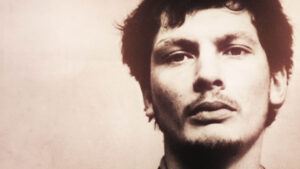
This article concerns the murder of six young women, two elderly people, and one woman whose relationship with the killer was the psychological foundation for everything he did. The physical particulars of some of the murders are disturbing and are described here only to the degree the honest account requires. The article also deals substantially with the FBI interviews that Kemper gave after his arrest and that helped build modern criminal profiling — an aspect of the case that is, in some ways, its most consequential long-term element.
Part One: The Man in the Booth
On the morning of 24 April 1973, a man stepped into a telephone booth in Pueblo, Colorado, and called the Santa Cruz, California Police Department. He gave his name: Edmund Emil Kemper III. He told the officer who answered that he was responsible for the recent murders of several young women in the Santa Cruz area. He gave the locations of two bodies that had not yet been found. He described what he had done with sufficient accuracy that the officer, initially sceptical, made further calls and confirmed that the man in Colorado was telling the truth. Kemper then sat down on the kerb beside the phone booth to wait.
He waited for several hours. He had, over the preceding four days, driven from California to Colorado listening to the radio for news reports about the murders. There were none. He had driven 1,500 miles, essentially alone in his own head with everything he had done, and nobody in California seemed to have noticed. He found this — by his own later account, given in extraordinary detail to investigators, psychiatrists, and FBI agents over the years that followed — difficult to process. He had killed his mother. He had killed her friend. He had, in the previous year, killed six young women. He had been living with all of this, in a small apartment in Aptos, California, keeping it internally contained, and the world had continued without noticing. He had decided, by a process he himself could not entirely explain in linear terms, that the only resolution available was to report himself.
The officers who arrived at the Pueblo phone booth to arrest Edmund Kemper found a twenty-four-year-old man who was six feet nine inches tall and weighed somewhere between 250 and 300 pounds. He was cooperative, calm, and had already been sitting on the kerb for long enough that he appeared to have made his peace with the situation. He was handcuffed, placed in a patrol car, and driven to the local police station. He asked for Santa Cruz investigators to be sent. He wanted, he said, to tell everything to people who knew the case.
Over the weeks and months that followed, he did exactly that. And in doing so he became, eventually, one of the most important subjects in the history of criminal psychology.
Part Two: The House on Durazno Avenue
Edmund Emil Kemper III was born on 18 December 1948 in Burbank, California. He was the second of three children of Edmund Emil Kemper II and Clarnell Stage. His father, by all subsequent accounts, was a man of conventional mid-century American masculinity — a World War Two veteran who had done test work on nuclear weapons at Bikini Atoll in the 1940s and who, by the time Edmund III was a small child, was a distant and largely absent figure in the household. His parents divorced in 1957, when Edmund was eight. His mother Clarnell took the three children to Montana. The father disappeared from Edmund’s life in any meaningful sense.
Clarnell Stage Kemper is one of the most analysed maternal figures in the literature of serial homicide. She was, by the accounts of her son, of the FBI agents who later interviewed him at length, and of the psychiatrists who evaluated him both before and after his murders, a woman whose treatment of Edmund was sustained and systematic in its damage. She was, by some accounts, an alcoholic. She was, by virtually every account, a woman who found her son physically threatening — he grew rapidly and was already exceptionally large as a child — and who expressed this discomfort by subjecting him to a pattern of sustained belittlement and contempt. She moved him, at some point during his early adolescence, out of the bedroom he had shared with his sisters and into the basement of the house, telling him that she did this because his size frightened the girls. She told him, repeatedly and in terms that the interviews he gave after his arrest repeatedly return to, that no woman would ever want him, that he was ugly, that his size and his manner made him repellent. She appears to have found his evident attachment to her threatening and uncomfortable, and to have responded by increasing the distance and the contempt.
What this produced, in the assessment of John Douglas, the FBI agent who would later interview Kemper at length and who wrote about the case in his memoir Mindhunter, was a man whose psychological relationship with women had been fundamentally shaped by the experience of desperate attachment to someone who found his attachment disgusting. Kemper wanted, Douglas concluded, to love women and to be loved by them. He also, by the time his adolescence had run its course in Clarnell’s household, wanted to destroy them. Both impulses were present simultaneously, and neither could be separated from the other.
Two smaller, earlier signals of what was building are documented in the record. As a young child, Kemper had asked his sister what he would have to do to kiss his teacher. She had told him, apparently as a joke, that he would have to kill her first. The anecdote has circulated in the Kemper literature long enough to have acquired something of the status of myth, but it comes from Kemper’s own account and there is no reason to doubt the basic shape of it. The other signal was the cats. Kemper killed the family cats during his childhood — methodically, and with what he later described as a desire to see what was inside them and to possess them completely. He buried one in a shallow grave in the yard, then dug it up, decapitated it, and mounted the head on a spike in his room. When his mother found it, she made him hold the head and publicly humiliated him in front of his sisters.
In 1963, when Kemper was fourteen, Clarnell sent him to live with his paternal grandparents, Edmund and Maude Kemper, on a small farm in North Fork, California. The ostensible reason was that she was concerned about his behaviour around his sisters. The practical consequence was that Edmund Kemper arrived at his grandparents’ farm as a large, withdrawn, deeply damaged fourteen-year-old who had been rejected by his mother and sent to live with strangers.
Part Three: The Grandparents
On 27 August 1964, Edmund Kemper was fifteen years old. He had been living at the North Fork farm for approximately a year. His grandmother Maude was in the kitchen. His grandfather Edmund was outside. Edmund III went to his room, retrieved a .22 calibre rifle, walked to the kitchen, and shot his grandmother three times. He has given various accounts of why, across the many interviews he has given in the years since. The most consistent version is that she had been nagging him about something — the exact nature of the provocation has varied in different tellings — and that the impulse to shoot her was, in the moment, simply stronger than the recognition that doing so was wrong and would have consequences. She died in the kitchen.
His grandfather was returning to the house from outside. Kemper walked out and shot him with the same rifle as he approached the back door. He has said, in interviews, that he killed his grandfather primarily because he did not want him to see what had been done to his grandmother.
He then called his mother. He told her what he had done. She told him to call the police. He did. He sat outside and waited for the officers to arrive in a manner that would, seven years later in Colorado, be repeated almost exactly. The officers found a fifteen-year-old boy who had killed both his grandparents with a .22 rifle and was sitting outside waiting to be arrested. He told them what he had done. He told them why, as far as he understood his own motivations. He was cooperative, lucid, and showed no apparent distress.
He was committed to Atascadero State Hospital — a maximum-security facility for the mentally disordered — and spent five years there. The psychiatric assessment at Atascadero concluded that he was intelligent (his IQ was measured at between 136 and 145 across various tests), that he had a borderline personality structure with significant antisocial features, and that he had demonstrated a capacity for violence that required sustained care. He was also, within the hospital environment, a model patient. He was cooperative, helpful to staff, engaged with therapy, and demonstrated, by every external measurement available, the behavioural markers of progress. The Atascadero psychiatrists, when they recommended his release to the California Youth Authority in 1969, noted that they considered him likely to be dangerous if placed back in the custody of his mother. They recommended explicitly that he should not be returned to Clarnell’s care.
The California Youth Authority returned him to Clarnell’s care. She had moved to Santa Cruz, where she was working as an administrative assistant at the University of California. Kemper was twenty years old, six feet nine, and living with the woman whose sustained contempt had been the formative experience of his psychological development. His juvenile record was expunged. Nobody in Santa Cruz knew what he had done at North Fork.
Part Four: The Santa Cruz Years
The period between Kemper’s release from Atascadero in 1969 and his first murder in May 1972 has been documented in unusual detail, partly because Kemper’s own subsequent accounts of it were exhaustive and partly because several people who knew him during those years have given interviews in the decades since. What emerges is a picture of a young man who was, in many respects, managing his own condition with considerable effort and limited success.
He got on well enough with most people he encountered. He was charming in a particular way — physically imposing, but self-deprecating about it, and possessed of an intelligence and verbal fluency that most people found engaging rather than threatening. He befriended police officers at a local bar called the Jury Room, where off-duty Santa Cruz police spent time after shifts. He developed something close to friendship with several officers, who called him “Big Ed” and treated him as something between a mascot and a regular. He applied to become a state trooper and was rejected on the grounds of his size — California Highway Patrol had a height maximum that he exceeded. He eventually got a job with the California Division of Highways. He drove. He thought. He managed what he later described as a constant internal pressure that he could not fully articulate to anyone and that he had no means of addressing through any legitimate channel.
He continued to live with Clarnell for much of this period. The relationship remained, by his accounts, what it had always been. She belittled him. She told him he would never amount to anything. She compared him unfavourably to the university students she worked with and said he was an embarrassment. She drank. He stayed. The dynamic was, in retrospect, the engine that was building toward what happened in May 1972, in the way that a pressure vessel builds toward failure — not through a single dramatic event but through the slow accumulation of a force that has nowhere to go.
He began, by his own later account, to rehearse the murders in his mind for months before the first one. He drove the Santa Cruz highways, watching hitchhikers — the university students who were ubiquitous in the area in the early 1970s, thumbing rides between campus and town and between the various colleges of the University of California system — and imagined what he would do if he stopped for one of them. He picked up hitchhikers and let them go. He drove past hitchhikers he had decided to stop for and then kept driving. He was, he told investigators, conducting a deliberate exercise in self-management that he knew was ultimately failing but that he felt compelled to continue until the failure became undeniable.
In May 1972, the failure became undeniable.
Part Five: The Co-Ed Murders
The six murders Kemper committed between May 1972 and February 1973 share a consistent structure that he later described in extensive and self-analytical detail. He would drive the Santa Cruz highways and offer lifts to young female hitchhikers. He would take them to a secluded location. He would kill them. He would take the bodies to his apartment or to a remote location. He would commit acts of necrophilia. He would dismember the bodies and dispose of the parts, sometimes burying them, sometimes dropping them from cliff edges into the Pacific. He kept, as trophies, body parts and personal effects. He took Polaroid photographs.
The victims were:
Mary Anne Pesce, eighteen, and Anita Luchessa, eighteen, both students at Fresno State College, were picked up on 7 May 1972 while hitch-hiking to Stanford University to visit a friend. They were killed in Kemper’s car on a remote road in Alameda County. Their bodies were taken to his apartment in Alameda, dismembered, and their remains disposed of at various locations. Kemper buried Pesce’s head in his mother’s garden in Aptos, facing upward, because — he told investigators — his mother “always wanted people to look up to her.”
Aiko Koo, fifteen, a dance student from Berkeley, was picked up on 14 September 1972 while hitch-hiking to a dance class after missing her bus. She was asphyxiated in Kemper’s car, her body taken to his apartment and dismembered. Kemper later told investigators that after leaving Aiko’s body in the boot of his car, he had driven to a previously scheduled psychiatric appointment at which he had been assessed as low-risk. The psychiatrist had not noticed anything unusual. The body was in the car park.
Cindy Schall, nineteen, a Cabrillo College student, was picked up on 7 January 1973. She was shot in the head with a .22 calibre handgun inside Kemper’s car and killed. Her body was taken to the house he was now sharing with Clarnell in Aptos, kept overnight in a closet, and dismembered the following day while Clarnell was at work. Her head was buried in the garden, again facing the house.
Rosalind Thorpe, twenty-three, a UC Santa Cruz student, and Alice Liu, twenty-one, a UC Santa Cruz student, were picked up on 5 February 1973 near the campus. Both were shot in the car and killed. Their bodies were taken to Kemper’s mother’s house and dismembered there.
By February 1973, Kemper had killed six young women. He had been questioned once by police in connection with a report that his car had been seen near a location where a hitchhiker had been reported missing, but the inquiry had produced nothing. His Santa Cruz police contacts — the officers at the Jury Room — had no suspicion of him. Nobody in official Santa Cruz was looking seriously at the large, friendly, self-deprecating man who drank with the off-duty police and occasionally helped with crowd control at local events.
Part Six: Easter Sunday
On 20 April 1973, the day before Easter Sunday, Kemper returned to his apartment after spending the evening at a bar and found himself unable to sleep. He has given various accounts of what was running through his mind in the early hours of 21 April, and the accounts are not entirely consistent. What is consistent across all of them is that he reached a decision — or, more precisely, that a decision reached him — sometime before dawn.
He went to his mother’s room. Clarnell Strandberg Kemper — she had remarried, and now used the name Clarnell Strandberg — was asleep. He hit her on the head with a claw hammer. He cut her throat. He decapitated her. He had sex with the severed head. He removed her larynx — the part of her throat from which her voice came — and disposed of it down the waste disposal unit in the kitchen. He later told investigators that he had done this because she had “bitched and screamed and yelled at him over the years,” and that he had put the larynx in the disposal because “it seemed appropriate, as much as she’d bitched and screamed and yelled at me over the years. It seemed appropriate to put her mouth into the disposal.” The disposal jammed and the larynx was later recovered.
He then called Sara “Sally” Hallett, fifty-nine, his mother’s close friend, and invited her over for a surprise dinner for Clarnell. Hallett arrived. Kemper strangled her and decapitated her. He left both bodies in the house. He drove east. He drove for four days, listening to the radio, before making the call from the Pueblo phone booth.
Part Seven: The Trial
Kemper’s trial began in October 1973 at the Santa Cruz County Superior Court. He had pleaded not guilty by reason of insanity — a plea he would subsequently say he made not because he believed it was accurate but because the alternative was the death penalty, and he genuinely wanted to be executed. He had asked, at his arraignment, for the death penalty. He had told the court he wanted to die in the electric chair. The California Supreme Court had suspended capital punishment in February 1972, four months before his first murder. He could not be executed. He was asking for something that was temporarily unavailable.
The insanity defence was built around the reports of three psychiatric witnesses who argued that Kemper met the legal standard for insanity at the time of the killings. The prosecution countered with its own psychiatric evidence and with Kemper’s own extensive post-arrest statements, in which he had repeatedly demonstrated an acute understanding of the wrongfulness of what he had done and an ability to plan, conceal, and manage the consequences that was inconsistent with the absence of substantial capacity the insanity standard required. His statement to the phone booth operator — his self-surrender, his directness, his detailed accounts — had given the prosecution an almost inexhaustible supply of evidence of a man who knew exactly what he was doing and had been doing it deliberately for a year.
The jury found him guilty on all eight counts of first-degree murder on 8 November 1973. He was sentenced to life in prison. He has been incarcerated, principally at the California Medical Facility in Vacaville, for more than fifty years. He is seventy-seven years old at the time of writing. He has appeared before the parole board multiple times and has, on some occasions, reportedly told the board he should not be released. He remains incarcerated. His status is reviewed periodically.
Part Eight: The Interviews That Changed Everything
If the Kemper case had ended with his conviction and imprisonment, it would be a significant case in the American serial killer literature — notable for the self-surrender, for the psychological profile of the mother relationship, for the systematic detail of the murders — but not uniquely important. What makes it uniquely important is what Kemper did for the next decade from his prison cell at Vacaville.
In the late 1970s, two FBI agents from the recently established Behavioral Science Unit at Quantico, Virginia, began what would become the most important interview programme in the history of American criminology. Special Agent John Douglas and Special Agent Robert Ressler had been developing the theoretical framework for what would eventually be known as criminal profiling — the use of crime scene evidence and victim patterns to construct a psychological profile of an unknown offender. The theory needed grounding. They needed to talk to the people who had actually committed the crimes that the theory was trying to account for.
They identified thirty-six convicted serial killers who were willing to be interviewed. The programme would eventually produce, among other outputs, the Crime Classification Manual of 1992, the formal taxonomy of violent offenders that became the foundational reference in American criminal psychology. Among the thirty-six was Edmund Kemper, who turned out to be, in the words of Ann Burgess, the criminologist who co-directed the research programme with Douglas and Ressler, the most articulate of all the subjects they interviewed.
Kemper’s willingness to cooperate was total. He answered every question. He described his crimes in forensic detail. He described his psychological states before, during, and after each killing. He described the development of his fantasies and the escalation from fantasy to action. He described the relationship with his mother in terms so precise and self-aware that the investigators found them, in some passages, more clinically useful than anything a trained psychologist might have produced. He appeared to have, in the years of his incarceration, conducted a sustained self-analysis that had yielded genuine insight into his own pathology — insight he was prepared to share with anyone who asked the right questions in a sufficiently serious way.
The specific contributions the Kemper interviews made to the emerging field were documented by Douglas, Ressler, and their colleagues in a series of publications over the following decades. Several specific examples are worth noting. The connection between childhood animal cruelty and later violence against humans — one element of the so-called “Macdonald Triad” that investigators had been using as a predictive marker — was significantly refined by the Kemper interviews. Before the BSU research, animal cruelty was noted on investigative forms in a catch-all “other” category. After Douglas’s conversations with Kemper, the specific nature and escalation of animal cruelty became a distinct and actively solicited data point. The distinction between “organised” and “disorganised” offenders — the fundamental taxonomy the BSU developed for categorising serial killers — was partly shaped by the contrast between Kemper’s meticulous planning and the crime scenes of less organised offenders the unit also studied. The concept of the “cooling-off period” between killings as a defining characteristic of the serial killer (as opposed to the mass murderer or the spree killer) was partly developed through the analysis of Kemper’s own campaign and his accounts of the periods between murders.
Douglas has described Kemper as the subject who, more than any other of the thirty-six interviewed, gave him the conceptual vocabulary for thinking about serious violent offenders. Ressler, who also conducted extensive interviews with Kemper, wrote about him at length in his own memoir Whoever Fights Monsters. The physical reality of the interviews — a very large man in a prison cell, speaking with complete composure about the details of ten murders — has been described by both agents as an experience that required particular psychological management to sustain. Kemper was not hostile. He was not evasive. He was, in some respects, the most cooperative interview subject either agent encountered in the entire programme. The difficulty was precisely in that cooperativeness — in the gap between the intellectual quality of what he was saying and the content of what he was saying it about.
Jana Monroe, a later BSU agent who also had extended contact with Kemper, has said in interviews that he left her “shaken” in a way that no other subject did — specifically because of an incident in which he somehow obtained her telephone number and called her from prison. Monroe went on to serve as one of the models for the Clarice Starling character in Thomas Harris’s The Silence of the Lambs, and thus connects Kemper, through her experience of interviewing him, to the cultural depiction of the serial-killer interview that has shaped public understanding of criminal profiling for three decades.
The Netflix series Mindhunter, which ran for two seasons between 2017 and 2019, depicted the BSU interview programme with Kemper at its centre. The actor Cameron Britton’s performance as Kemper — physically imposing, conversationally fluent, alternately amusing and terrifying — was one of the series’ most widely praised elements. The show was created and produced by David Fincher, who had previously directed Zodiac, and it brought the Kemper interviews and their role in the development of profiling to a new generation of viewers who had no prior knowledge of the case. John Douglas subsequently released recordings of his actual Kemper interviews as a MasterClass seminar in 2022, under the title “Learning from a Killer: The Kemper Tapes.”
Part Nine: What Kemper Represents
The question that Kemper’s case poses, and that the BSU interview programme was designed to address, is the question of what criminal profiling can actually tell us about the relationship between biography, psychology, and violence. Kemper is, in some ways, the case that made the field possible, because he was willing to articulate — with unusual precision and at unusual length — the connection between what happened to him as a child and what he did as a young man.
The connection he articulated, and that Douglas and Ressler built their analysis around, was the relationship with Clarnell. Douglas’s formulation — “his mother broke him; she neutered him psychologically, through years of psychological abuse” — is the version that has entered the popular literature, and it captures something real. Kemper’s murders were substantially organised around the woman he most needed and most resented. The burying of victims’ heads in his mother’s garden, facing the house. The disposal of her larynx in the waste disposal because of the voice that had told him for years he was worthless. The act of killing her, ultimately, rather than the women who represented her — an act that he described to investigators as having produced, in the immediate aftermath, something close to relief.
The caution that serious clinical assessment applies to this framework is important to note. The connection between maternal abuse and serial homicide is a genuine empirical observation in the literature, but it is not a sufficient explanation. Countless people endure abusive or contemptuous parents without becoming serial killers. Kemper himself acknowledged this. What the biography provides is context, not cause — the specific landscape in which a particular psychological disturbance developed its particular form. Understanding that landscape helps investigators recognise patterns in other cases. It does not explain why some people subjected to the same landscape produce violence and others do not.
What Kemper’s case adds to the field — beyond the specific insights he gave the BSU — is the demonstration that the category of “serial killer” is not a monolith. He was organized, verbally fluent, cooperative with authority, capable of functioning in normal social contexts for extended periods, and possessed of genuine self-insight. He was, in the taxonomy the BSU developed partly in response to his case, an organised offender of a particular and unusual type. The comparison with disorganised offenders — with the crime scenes of the truly psychotic, the truly impulsive, the truly dissociated — is what gives the taxonomy its analytical value. Kemper, sitting in a prison cell at Vacaville for fifty years and explaining himself at length to whoever asked, is the organised pole of that comparison. He is, in this sense, as important to the history of criminal psychology as he is to the history of serial homicide.
Part Ten: The Names That Matter
Ten people were killed by Edmund Kemper between 1964 and 1973. They were:
Maude Kemper, his grandmother, killed 27 August 1964. A woman in her sixties who had agreed to give her grandson a home when his mother could no longer manage him. She was in her kitchen when he shot her.
Edmund Kemper II, his grandfather, killed 27 August 1964. A man who had been returning to the house from outside when his grandson came out to meet him with a rifle. He was shot before he reached the back door.
Mary Anne Pesce, eighteen, killed 7 May 1972. A Fresno State student who was hitch-hiking to see a friend at Stanford University.
Anita Luchessa, eighteen, killed 7 May 1972. Travelling with Mary Anne Pesce, on the same journey, to the same destination.
Aiko Koo, fifteen, killed 14 September 1972. A dance student from Berkeley who had missed her bus to a dance class and was hitch-hiking. She was fifteen years old. There was a body in the boot of the car at Kemper’s psychiatric appointment the following day.
Cindy Schall, nineteen, killed 7 January 1973. A Cabrillo College student. Her head was buried in the Aptos garden, facing the house.
Rosalind Thorpe, twenty-three, killed 5 February 1973. A UC Santa Cruz student.
Alice Liu, twenty-one, killed 5 February 1973. A UC Santa Cruz student, travelling the same route as Rosalind Thorpe.
Clarnell Strandberg Kemper, fifty-two, killed 21 April 1973. His mother. She had, by every available account, treated him with sustained contempt for most of his life. She also had not killed anyone. She was asleep when he entered her room.
Sara “Sally” Hallett, fifty-nine, killed 21 April 1973. She was Clarnell’s friend and had been invited to the house for a dinner that was presented to her as a surprise celebration. She arrived. She was strangled.
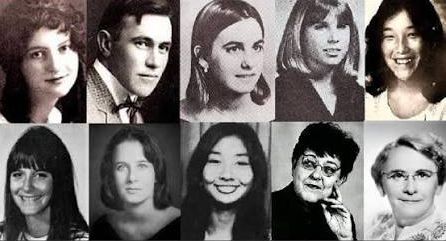
Most of the young women he killed had done what the hitchhiking culture of early-1970s California normalised — accepting lifts from strangers on the assumption that the stranger was not dangerous. The assumption was reasonable. The statistics of hitch-hiking in California in 1972 supported it. They were unlucky in the specific stranger they met.
The grandparents had taken him in when his mother sent him away. Sally Hallett had done nothing except know his mother.
And Clarnell, whose treatment of her son is documented across multiple independent accounts and whose psychological legacy is beyond serious dispute, was nonetheless a person and not merely an explanation. She was fifty-two years old. She had built a career and raised three children. The damage she did to Edmund was real. The damage he did to her was also real. Both of these things can be true simultaneously, and the honest telling of the case requires both to be acknowledged.
A Final Note
Edmund Kemper is, as of 2026, seventy-seven years old and has been incarcerated at the California Medical Facility in Vacaville for over half a century. He has been, by the accounts of the prison staff who work with him and of the investigators and journalists who have continued to visit him, a model prisoner — cooperative, engaged in prison education programmes, involved in the recording of audio books for the blind for several years through a prison volunteer programme. He reads. He thinks. He talks to people who come to talk to him.
He remains, in the clinical literature, one of the most thoroughly documented serial offenders in history. His cooperation with the FBI interviews produced a body of recorded material — the Kemper tapes — that continues to be used in the training of investigative agents and criminal psychologists. John Douglas, in the inscription he wrote in Kemper’s copy of the Crime Classification Manual, told him that “with your continued help we may be able to save a child from becoming a victim.” The sentiment is extraordinary in its specificity — an FBI agent thanking a man who had killed ten people, including a fifteen-year-old girl, for helping to prevent future violence. But the sentiment is not entirely wrong. The framework the Kemper interviews helped to build has been used, in the decades since, to identify potential offenders earlier, to investigate crime scenes more effectively, and to understand the developmental path from a damaged childhood to adult violence in ways that were simply not available before the BSU’s work. Whether this constitutes a meaningful legacy, and for whom, is a question that the families of his victims are better positioned to answer than anyone else.
The most important thing that can be said about the Kemper case, when the criminal psychology and the pop-culture dramatisations and the FBI interview legacy have all been set aside, is the simplest. Aiko Koo was fifteen and was trying to get to her dance class. Mary Anne Pesce and Anita Luchessa were eighteen and were going to see a friend. Sally Hallett came to someone’s house for dinner. These were ordinary things that ordinary people do. They were done by people whose names deserve to be remembered as more than entries in the casebook of someone who, however significantly, helped the FBI to develop a better understanding of why such things happen.