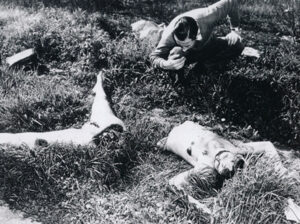
A warning before this article. The Hinterkaifeck murders involved the killing of two children, including a seven-year-old girl whose injuries indicate she remained alive for some hours after the initial attack. The case also involves documented incest within the victim family. Neither element can be left out of an honest account, but both are handled in this piece with the restraint the material requires. The case is more than a hundred years old and the people involved are all long dead; the available historical record is what we have, and what follows is drawn from it.
Part One: The Farm
Hinterkaifeck was the local name for a small farmstead about seventy kilometres north of Munich, in the rolling agricultural country of Upper Bavaria. It lay between the villages of Gröbern and Wangen, in the parish of Waidhofen, on a slight rise of land surrounded by fields on three sides and by a small patch of pine forest on the fourth. The nearest neighbour was approximately half a kilometre away. The nearest village was two kilometres. The farm was not on any road that anyone would travel for any reason other than to reach the farm itself.
The buildings, by 1922, consisted of a single combined structure — a long, low Bavarian farmhouse with the family living quarters at one end, the dairy and kitchen in the middle, and the barn and animal stalls running off the rear under the same roof. This kind of integrated farmstead, in which the people and the livestock effectively lived under one continuous roofline, was common in Bavarian rural building of the period. It meant that someone in the family quarters could, by passing through a series of internal doors, walk directly from the bedroom to the cowshed without ever stepping outside. It also meant that, for a determined intruder, the same internal connections that the family used for daily life provided unobserved access between every part of the property.
The family who lived there were the Grubers. Andreas Gruber, sixty-three, was the patriarch. He was a working farmer of the Bavarian-Catholic peasant type — physically still strong, parsimonious with money, by every contemporary account a difficult and domineering man who had treated his wife and daughter with sustained harshness over many years. Cäzilia Gruber, seventy-two, was his wife. She was the steadier presence in the household, deeply religious, attentive to her grandchildren, increasingly frail in her seventies but still active in the running of the farm. Their daughter Viktoria Gabriel, thirty-five, had returned to live at Hinterkaifeck after her husband Karl Gabriel was reported killed at Verdun in 1914. Viktoria had two children: Cäzilia, seven, who shared her grandmother’s name, and Josef, two.
This was the household as it stood on the morning of Friday 31 March 1922, with one addition. Maria Baumgartner, forty-four, the family’s new maid, had arrived at the farm that very morning to begin her employment. The previous maid had left some six months earlier. The reasons given by the departing maid had been documented: she had been hearing footsteps in the empty attic at night for some weeks, and had become convinced that the farmhouse was, in the language of rural Bavaria in 1921, haunted. The family had been unable to find a replacement for months. Maria Baumgartner, who had travelled to Hinterkaifeck from a nearby village, was finally beginning the work. She had been on the property for less than half a day when she was killed.
Part Two: The Strange Weeks
What happened at Hinterkaifeck in the weeks before the murders, as later reconstructed from Andreas Gruber’s own statements to neighbours, is one of the case’s most unsettling features.
Some time in early March 1922 — accounts vary on the exact date, but Gruber himself placed it about six days before the killings — he had been outside the farmhouse on a morning after fresh snow had fallen and had noticed a single set of footprints in the snow leading from the edge of the pine forest behind the property toward the back of the farmhouse. The prints were of an adult man’s boots. There were no return prints leading back to the forest. Whoever had walked from the trees to the house had not, by the evidence of the snow, walked back out.
Gruber told this to neighbours. He told it to his brother-in-law. He told it, by some accounts, to other members of his family. He did not report it to the police. Bavaria in 1922 was not a place in which a working farmer reported isolated tracks in his own snow to the gendarmerie; the rural assumption of self-reliance was strong, and what police force existed in the area was sparse and not particularly oriented toward responding to footprints. Gruber appears to have taken the practical step of carefully searching the outbuildings, including the attic, the hayloft, the cowshed, and the barn. He found nothing.
Over the following days, other strange incidents accumulated. A Munich newspaper appeared on the kitchen table that nobody in the family had purchased — Munich papers were not delivered to Hinterkaifeck and were not subscribed to by anyone in the immediate area. The household keys disappeared and could not be found. Andreas told a neighbour that he had heard footsteps in the attic at night and had climbed up to investigate, finding nobody. The family dog, which under ordinary circumstances would have been expected to bark at any intruder, had become unsettled in ways that Andreas could not explain.
The most likely explanation of these events, accepted by every serious analyst of the case since 1922, is the simplest one. Someone had been living, undetected, in the upper floors of the Hinterkaifeck farmstead for several weeks. The attic, the hayloft, and the storage spaces above the integrated barn structure provided multiple places in which a determined intruder could have concealed himself. The intruder had been moving through the property at night. He had been taking food. He had been observing the family’s routines. The footprints in the snow had been the residue of his arrival; there had been no return prints because he had not, in any meaningful sense, left.
What is more disturbing is what this implies about Andreas Gruber. He had recognised, by his own statements, that something was wrong. He had searched. He had failed to find what he was looking for. And he had not, in the days that followed, taken the family to safety elsewhere. He had stayed. They had all stayed. The maid had arrived to begin work in a household whose patriarch had spent the previous fortnight wondering aloud whether someone was living in his attic.
The killings followed on the evening of Maria Baumgartner’s first day of employment.
Part Three: The Night
The exact sequence of what happened on the evening of 31 March 1922 has been reconstructed by investigators from the physical evidence at the scene. The sequence as understood is broadly as follows.
Some time after dark on 31 March, the killer used the connecting internal structure of the farmstead to enter the cowshed and the adjacent barn. He waited. At some point in the late evening or early hours of 1 April, members of the family began to enter the barn — possibly in response to a noise the killer had deliberately produced, possibly as part of the routine evening checks on the livestock that any farmer would have made. They were attacked, one at a time, as they entered, with a mattock — a heavy Bavarian agricultural tool resembling a pickaxe, with a flat blade on one side and a pointed pick on the other, used for breaking up hard soil. The blade end was used.
The order of the killings in the barn appears to have been: Cäzilia Gruber, the seventy-two-year-old grandmother, was struck first. Then Viktoria Gabriel, the thirty-five-year-old mother. Then Andreas Gruber, the patriarch. And then, finally, the seven-year-old Cäzilia, who appears to have been the last person from the barn group to die. The bodies were stacked in a corner of the barn and covered with hay and straw.
The autopsy of the seven-year-old produced one of the most disturbing details of the entire case. Her hands were clenched and contained tufts of her own hair. The medical examiner concluded that she had been alive for some hours after the initial blow — possibly as much as three or four hours — and that during that period, lying alongside the bodies of her grandmother, her mother, and her grandfather in the corner of the barn, she had pulled out her own hair in what the examiner believed was either a convulsion or a sustained physical response to pain and terror. She had eventually died of head injuries. She had been seven years old.
The killer then moved from the barn into the main farmhouse. Maria Baumgartner, the maid, was in her small bedroom near the kitchen. Two-year-old Josef Gabriel was in his cot in another room, probably his mother’s bedroom. Both were killed where they slept. Maria was struck with the mattock in her bed. Josef was killed in his cot. Neither would have understood what was happening to them. Maria had been at Hinterkaifeck for less than half a day. Josef was still a baby.
The killer then closed the doors. He fed the cattle. He cooked himself a meal in the kitchen, by the evidence of food preparation found at the scene by investigators four days later. He went, by all available reading of the evidence, to sleep in the farmhouse that night. And he stayed.
Part Four: The Four Days
From 1 April to 4 April 1922, by the unanimous conclusion of investigators then and since, somebody was living at Hinterkaifeck farmstead with the bodies.
The evidence for this is consistent and substantial. The cattle were fed and watered through 1 April, 2 April, and 3 April. The chickens were fed. The household stove was kept burning. Smoke from the chimney was observed by neighbours on each of the relevant days. Meals were cooked and partially consumed. A bed in the farmhouse had been slept in, by someone, on what appeared to be multiple occasions. Bread had been cut. Coffee had been made. Whoever was at Hinterkaifeck during those four days was making no apparent effort to leave or to conceal their presence from anyone who might have approached the property. There was simply nobody who approached.
The neighbours of the Gruber family had reasons to wonder. Viktoria Gabriel had been due at church choir practice on Sunday 2 April and had not appeared. The postman had attempted to deliver letters on 1 April and had been unable to find anyone to receive them; the post had been left in its usual place. Seven-year-old Cäzilia had been absent from her primary school on Monday 3 April. Some of these absences would have been the kind of thing that a small rural community would notice within a day. None of them, individually, was alarming. The first three days passed with the small misalignments of routine that any farming household occasionally produces, and the wider community noted them and assumed there was an ordinary explanation.
On the morning of Tuesday 4 April, four days after the killings, a coffee merchant who serviced rural Bavarian households arrived at Hinterkaifeck to make a scheduled delivery. He found the property quiet. He knocked and got no answer. He walked the perimeter and found nothing visibly wrong. He left without making the delivery and reported the absence to nearby acquaintances in Gröbern.
The acquaintances included Lorenz Schlittenbauer, a neighbour who lived approximately a kilometre from the farm and who had had a long and complicated personal relationship with Viktoria Gabriel — a relationship that had been documented in court records and would, over the following century, place him at the centre of the case. Schlittenbauer agreed with several other neighbours that the absence of any visible activity at Hinterkaifeck warranted investigation. In the early afternoon of 4 April 1922, Schlittenbauer, along with two other men named Michael Pöll and Jakob Sigl, walked the path from Gröbern to Hinterkaifeck to see what was going on.
Part Five: The Discovery
The three men arrived at the farmstead in the early afternoon. The barn doors were locked. They forced their way in. What they saw, in the corner of the barn, was the stacked bodies of Andreas Gruber, his wife Cäzilia, his daughter Viktoria, and his granddaughter Cäzilia. The bodies had been covered with hay, but the hay had been disturbed enough by the killer’s own movements over the previous four days that the position of the dead was visible to anyone entering the barn.
At this point in the events of 4 April, the behaviour of Lorenz Schlittenbauer became — and would remain — the central interpretive problem of the entire case.
According to the subsequent testimony of Pöll and Sigl, Schlittenbauer did not react to the discovery in the way they did. He did not appear shocked. He did not vomit, weep, or move away from the bodies. He approached them. He moved some of them. He touched them in ways that, by the assessment of every subsequent investigator, indicated familiarity with the scene rather than first-time discovery. He then, without consulting Pöll or Sigl, produced a key from his own pocket, walked alone to the main farmhouse door, unlocked it, and went inside by himself. He emerged some minutes later having found the bodies of Maria Baumgartner and Josef in their respective rooms. He told the other two men that he had been looking, in the farmhouse, for his son. By this he meant Josef.
The remark requires explanation, and the explanation goes back six years.
Part Six: The Schlittenbauer Connection
The documented history of the relationship between Lorenz Schlittenbauer and the Gruber family is, in its essential outline, this.
In 1914, Andreas Gruber had been formally accused of incest with his daughter Viktoria. The accusation had been substantiated by Viktoria’s own testimony at the time. Andreas was convicted in a Bavarian court and sentenced to one year in prison. Viktoria was also convicted and sentenced to one month. The conviction is a matter of court record. Cäzilia Gruber Jr., who was born in 1915 — the daughter who would die in the barn at age seven — was, in some readings of the family history, the child produced by this documented incestuous relationship, though paternity in such circumstances cannot be definitively established from the surviving record.
Viktoria’s husband Karl Gabriel was reported killed in action at the front in December 1914. His body was not recovered — the official account was that he had been killed by a shell explosion that left no remains. The lack of physical evidence of his death would, in due course, become one of the durable threads in the speculation about the Hinterkaifeck case.
In 1918 or thereabouts, Viktoria Gabriel began a relationship with Lorenz Schlittenbauer, a neighbouring farmer whose own wife had recently died. The relationship was sustained for some time and was sexually active. Schlittenbauer was at this point in his early forties. In 1919, Viktoria announced that she was pregnant. The pregnancy produced, on 19 December 1919, Josef Gabriel — the two-year-old boy who would die in his cot in April 1922.
The question of Josef’s paternity is, even now, contested. Viktoria initially told Schlittenbauer he was the father. She also told the local authorities and her father Andreas. Schlittenbauer was asked to pay child support. He refused. He then made a sustained legal effort to escape financial responsibility for the child, including making a renewed formal accusation of incest against Andreas Gruber — claiming, in effect, that Josef was the product of Andreas’s continued sexual abuse of Viktoria rather than of his own relationship with her. The accusation was investigated and produced an arrest of Andreas Gruber, but the court did not find Schlittenbauer’s testimony sufficient to support a conviction. Andreas was released. Schlittenbauer eventually accepted some responsibility for Josef, agreed to adopt him, and was paying support at the time of the killings. He had also, by 1922, married a different woman.
This was the complex history that lay behind Schlittenbauer’s remark, on 4 April 1922, that he had been looking for his son. By his own subsequent statements, Schlittenbauer maintained an ambivalent position on whether Josef had actually been his biological child or whether Josef had been the product of the continuing incestuous relationship between Andreas and Viktoria. He went to his grave in 1941 without ever providing a fully consistent account on the question.
Part Seven: The Investigation
The Bavarian police investigation that followed the discovery of the bodies was, by the standards of 1922 rural policing, a substantial operation. Officers from Schrobenhausen and from Munich attended the scene. The bodies were autopsied. The murder weapon — the mattock — was eventually recovered from the hayloft above the barn, where the killer had concealed it. More than a hundred individuals were interviewed in the weeks and months following the killings. The investigation was sustained for years.
What it suffered from, fundamentally, was a problem of basic forensic capacity. The 1922 Bavarian police did not have fingerprinting available as a reliable investigative tool. They did not have any of the bloodgrouping methods that would be developed in the following decades. They did not have systematic methods for preserving a crime scene. The Hinterkaifeck farmhouse was, in the days after the discovery, walked through by neighbours, by officers, by family members, by journalists, by curiosity-seekers. By the end of the first week after the discovery, the physical integrity of the scene was effectively destroyed. The heads of the four barn victims were removed from the bodies and sent to Munich for examination by a phrenologist, then a fashionable but later wholly discredited form of criminological practice. The heads were lost at some point during the early years of investigation and were never returned to the bodies for burial. The graves at Waidhofen contain headless skeletons.
The list of suspects who were investigated and dismissed over the following decades is extensive. The Bichler brothers, two seasonal labourers who had worked at Hinterkaifeck and whose sister Kreszenz Rieger — the maid who had quit six months before the killings — was alleged on her deathbed in the 1950s to have known something about the case, were investigated and could not be conclusively linked. Karl Gabriel, Viktoria’s husband supposedly killed in 1914, was the subject of recurrent speculation that he had survived the war, returned to find his wife raising a child by another man, and killed the entire family. No evidence of his survival was ever produced. Vagrants, travellers, and itinerant farmhands were investigated repeatedly throughout the 1920s and 1930s without producing a confession or actionable evidence. The case file was formally closed in 1955 but remained subject to intermittent re-examination through 1986, by which point every original investigator and every plausible suspect was dead.
Lorenz Schlittenbauer himself was investigated multiple times. He was interviewed at length in the immediate aftermath. He was interviewed again in subsequent years. He sued several private individuals who publicly accused him of the killings, winning at least one defamation case. He died of natural causes in 1941, aged sixty-seven, having maintained throughout that he had had nothing to do with the killings.
Part Eight: The 2007 Re-Examination
In 2007, the case was given its most thorough modern review when the Polizeifachhochschule (the Bavarian state police academy) in Fürstenfeldbruck assigned a class of advanced criminology students to re-examine all surviving documentation of the Hinterkaifeck case as a training exercise. The class had access to the original case files, the autopsy reports, the witness statements, and the geographic and architectural records of the farmstead. They applied modern criminological analysis — including offender profiling techniques developed in the decades since 1922 — to the material.
The conclusion the class reached, after several months of work, was that the most plausible single perpetrator of the Hinterkaifeck killings was someone with detailed prior knowledge of the farm, with significant personal motive directed at the Gruber family, and with the physical capability to handle a mattock against multiple victims in quick succession. The student investigation concluded by naming a specific suspect.
The Polizeifachhochschule did not, however, publicly release the name. The reason given by the academy was that the suspect identified had living descendants in the Waidhofen area, and that publishing the name would expose those descendants to public attention for an alleged offence committed by an ancestor who was now long dead and could not be tried. The academy’s position was that the conclusion would be deposited in the archive of the case file and would be available to qualified researchers, but that the wider public release of the name would do harm to people who bore no responsibility for what their ancestor had or had not done.
The name has, nonetheless, been widely speculated. The leading candidate, by an overwhelming consensus of subsequent independent researchers who have examined the case, is Lorenz Schlittenbauer. The case against Schlittenbauer rests on the convergence of several factors: his documented relationship with Viktoria Gabriel, his unresolved paternity claim regarding Josef, his ongoing financial dispute with the family over child support, his familiarity with the farmstead layout, his demonstrably odd behaviour at the scene of the discovery, his possession of a key to the main farmhouse that no neighbour should ordinarily have had, his unaccompanied entry into the building, and his subsequent decades of legal action against anyone who accused him publicly. The case against the case is that the evidence remains substantially circumstantial, that Schlittenbauer was never charged in his lifetime, and that the Bavarian courts of the 1920s and 1930s had access to the same material that modern researchers have and chose not to prosecute.
The honest reading is that Schlittenbauer is the most plausible single named suspect, that the 2007 Polizeifachhochschule investigation almost certainly identified him as their conclusion, and that the academy’s decision not to release the name was a defensible exercise of restraint regarding the descendants of a man who, despite the weight of the circumstantial case against him, was never proved in any court to have committed the murders.
The case remains, in 2026, formally unsolved.
Part Nine: The Farm
The Hinterkaifeck farmstead itself did not survive the case. In the immediate years after 1922 it was used briefly by relatives of the Gruber family, who attempted to continue operating it as a working farm. The attempt did not last. The reputation of the property in the local community was, understandably, ruined. By 1923 the buildings had been abandoned. In 1923 the property was demolished entirely, with the timbers and structural elements sold or destroyed. The site was returned to agricultural use. By the late 1920s nothing remained of the buildings except foundations.
The site today, just over a century later, is marked by a small memorial. A simple stone monument records the names of the six victims and the date 31 March 1922. The area around the monument is open agricultural land. Visitors do come, occasionally — the case attracts a steady trickle of true crime tourists from across Germany and from further afield — but the location is not signposted from any main road and requires deliberate effort to reach. The memorial itself is unobtrusive. A small wooden cross was erected next to the stone marker by local residents in the 1990s. Wildflowers grow around the site in spring.
The Gruber family graves are in the cemetery at the parish church of Waidhofen, a short distance away. The graves contain, as noted, headless skeletons; the heads were lost during the failed forensic examinations of the 1920s and never returned. This detail has become, for many who have followed the case, the small additional indignity that summarises the rest of it. The state failed the Grubers in life, by being unable to protect them from whoever was living in their attic. It failed them in death, by being unable to bring their killer to justice. And it failed even their remains, by losing the parts of their bodies that had been removed for examination by a discredited Victorian pseudoscience.
Part Ten: The Names That Matter
The murdered were:
Andreas Gruber, sixty-three, the patriarch of the farm. A working farmer of the Bavarian-Catholic peasant type. He had been convicted of incest with his own daughter in 1914 and had been at the centre of further accusations in 1919. He was, by every account, a difficult man whose treatment of his wife and daughter was harsh. None of this means he deserved what was done to him. He was also a husband, a father, a grandfather, and the head of a household. He died in the barn of his own farm at the end of a working day.
Cäzilia Gruber, seventy-two, his wife. She was, by neighbour accounts, the gentler presence in the household. She was devoted to her grandchildren. She had endured her husband through a long marriage that, by any modern assessment, contained sustained harm. She had also raised a daughter under conditions whose full circumstances were known to the local community and were the source of considerable village gossip. She died alongside her husband in the barn.
Viktoria Gabriel, thirty-five, their daughter. Her life had been shaped, by every available reading of the record, by the abuse she had endured from her father from her adolescence onward. Her marriage to Karl Gabriel in 1914 had been her one attempted escape from the household, and his death in the war had returned her to it. Her relationships in the years afterward — with Lorenz Schlittenbauer in particular — had been complicated by the continuing presence of her father in her life. She had been, by all accounts, a devoted mother to her two children. She died in the barn alongside her parents.
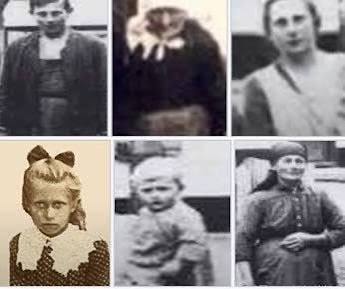
Cäzilia Gabriel, seven, her daughter. A child whose paternity has never been definitively established but who was, in every meaningful sense, the granddaughter of Cäzilia Gruber Sr. and the centre of her grandmother’s affection. She was a primary school pupil at Waidhofen. She had been due in class on the morning her absence was first noticed. She died in the barn in conditions whose specific cruelty — the period of consciousness after the initial blow, the tufts of her own hair found in her clenched hands — has been one of the case’s most resistant facts. She was seven years old.
Josef Gabriel, two, her brother. A small boy whose paternity was the source of the documented dispute between his mother, his alleged father Lorenz Schlittenbauer, and his grandfather Andreas Gruber. He understood, on the evening of his death, none of this. He was asleep in his cot when the killer entered his room.
Maria Baumgartner, forty-four, the new maid. She had arrived at Hinterkaifeck on the morning of 31 March 1922 to begin her employment. She had no prior connection to the family. She had no knowledge of the documented family history that may or may not have produced the killings. She was, in the most ordinary and final sense, the wrong person in the wrong place at the wrong time. She had been at Hinterkaifeck for less than half a day. She had not yet finished her first day of work.
A Final Note
The Hinterkaifeck murders are, by some distance, the most thoroughly resistant unsolved case in modern German criminal history. They have produced no confession. They have produced no formal arrest. They have produced no court verdict. The 2007 Polizeifachhochschule investigation reached a conclusion that the academy declined to publish, and the consensus identification of Lorenz Schlittenbauer that has emerged from independent research is not a substitute for the legal process that, in 1922 and 1923 and across the following decades, never produced a charge.
What the case represents, in the broader history of unsolved crime, is the demonstration that the elements which most resist resolution — the geographic isolation of the scene, the destruction of physical evidence in the early hours after discovery, the contamination of the scene by well-meaning visitors, the inadequacy of contemporary forensic methods, the loss of records and exhibits over the decades — combine in particular cases to produce a residue that cannot now be reduced further. We know what happened at Hinterkaifeck. We do not know who did it. We are, a hundred and four years on, in the position of being able to say only that the documentary record points fairly clearly at one man whose name the German state has elected not to confirm.
The case has acquired, over the past two decades, the kind of online cultural presence that grim historical mysteries tend to develop. There are documentaries. There are forum threads. There are amateur reconstructions of the farmstead’s floorplan. There are visits to the memorial that are recorded on YouTube and posted to social media. The case is, for the genre of true crime, an unusually durable and unusually atmospheric one. The footprints in the snow leading toward the house with none leading back have entered the iconography of the unsolved. So have the four days during which somebody lived in the farmhouse with the bodies. So has the detail of the seven-year-old’s hair clenched in her own hands.
The atmospheric quality of the case is real. It is also, in its own way, an obstacle to the careful telling of it. The Grubers and Maria Baumgartner were people. They were a difficult and damaged family, with a documented history that includes serious sexual abuse and the abuses of power that flow from such relationships in small rural communities. They were also, in every meaningful sense, a household — six people connected by blood and marriage and recent employment, living together in a Bavarian farmhouse on the last day of March in 1922, going about their evening tasks. They were killed by somebody who almost certainly knew them and who had been waiting for them. They deserved better in life, and they deserved better in death, and they deserved better than the lost heads, and they deserved better than a hundred years of not knowing.
They have, at least, the small stone memorial at the site of the farmhouse, the headless graves at Waidhofen, and the names. Andreas Gruber. Cäzilia Gruber. Viktoria Gabriel. Cäzilia Gabriel. Josef Gabriel. Maria Baumgartner. Six people. One night. One killer. No name.